PacketRadio.ca
Community Broadcasting
Lessons from Volunteer-Driven Radio Networks
Volunteer-run radio stations and packet networks share the same governance problems. A working set of lessons for community broadcasters from both worlds.
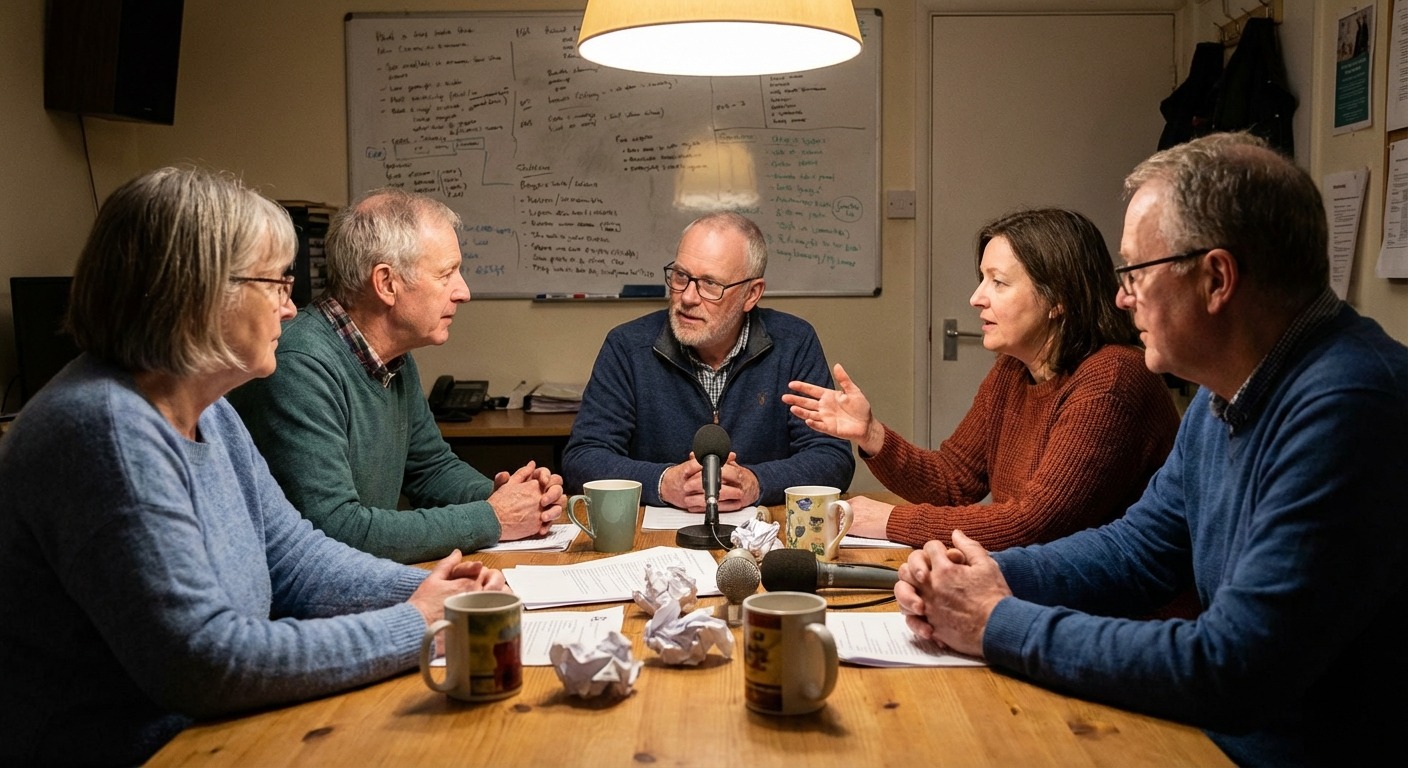
Volunteer-driven radio is less romantic from the inside than it looks from the outside. The romantic version is a small group of devoted enthusiasts keeping a local signal alive. The realistic version is a small group of devoted enthusiasts handling roster gaps, awkward conversations about behaviour on air, equipment failures at inconvenient hours, and the slow background work of keeping a non-profit corporation in good standing. The romance is real. So is the paperwork.
What follows is a working set of lessons drawn from inside volunteer broadcasting, and from the volunteer technical networks — the packet-radio nodes, BBSes and digipeaters of the 1980s and 1990s — that built much of the muscle memory the modern community sector still uses without realising it. Read alongside our notes on APRS, BBS, AXIP and NetROM if you want the technical backstory.
The first lesson: the network is the people, not the gear
Every volunteer technical organisation eventually learns this, usually the hard way. You can replace a transmitter. You can replace a mixer. You can rebuild a stream encoder from scratch in an afternoon. You cannot quickly replace the volunteer who knew how the antenna pattern was tuned, who held the keys to the tower site, and who had the relationship with the landlord.
Treat people-knowledge as infrastructure. Document it. Train backups. Pair every critical role with at least one understudy. The amateur-radio clubs that survived from the 1970s into the present did this almost without thinking. The community stations that disappeared usually didn't.
Governance: small enough to move, formal enough to survive
Volunteer broadcasters live in a constant tension between informality (which is why people enjoy the work) and formality (which is why the organisation is still around in five years). The trick is not to pick one. It is to keep them in different rooms.
- Operations stays informal
- Show planning, music rotation, the running joke between two co-hosts. Don't bureaucratise creative work.
- Governance stays formal
- Board minutes, financial reporting, conflict-of-interest declarations, written policies on harassment, on-air conduct, and political endorsement. Boring. Necessary. The thing that lets the station respond to a serious complaint without dissolving into a faction fight.
- Membership is the bridge
- An annual general meeting where actual members vote — not just the existing board re-electing itself — is the simplest legitimacy mechanism a community station has. Don't skip it.
The NCRA publishes governance resources for member stations that are worth reading even if your station isn't a member. The Canadian community-radio sector has spent forty years figuring out what works.
Recruitment and the on-ramp problem
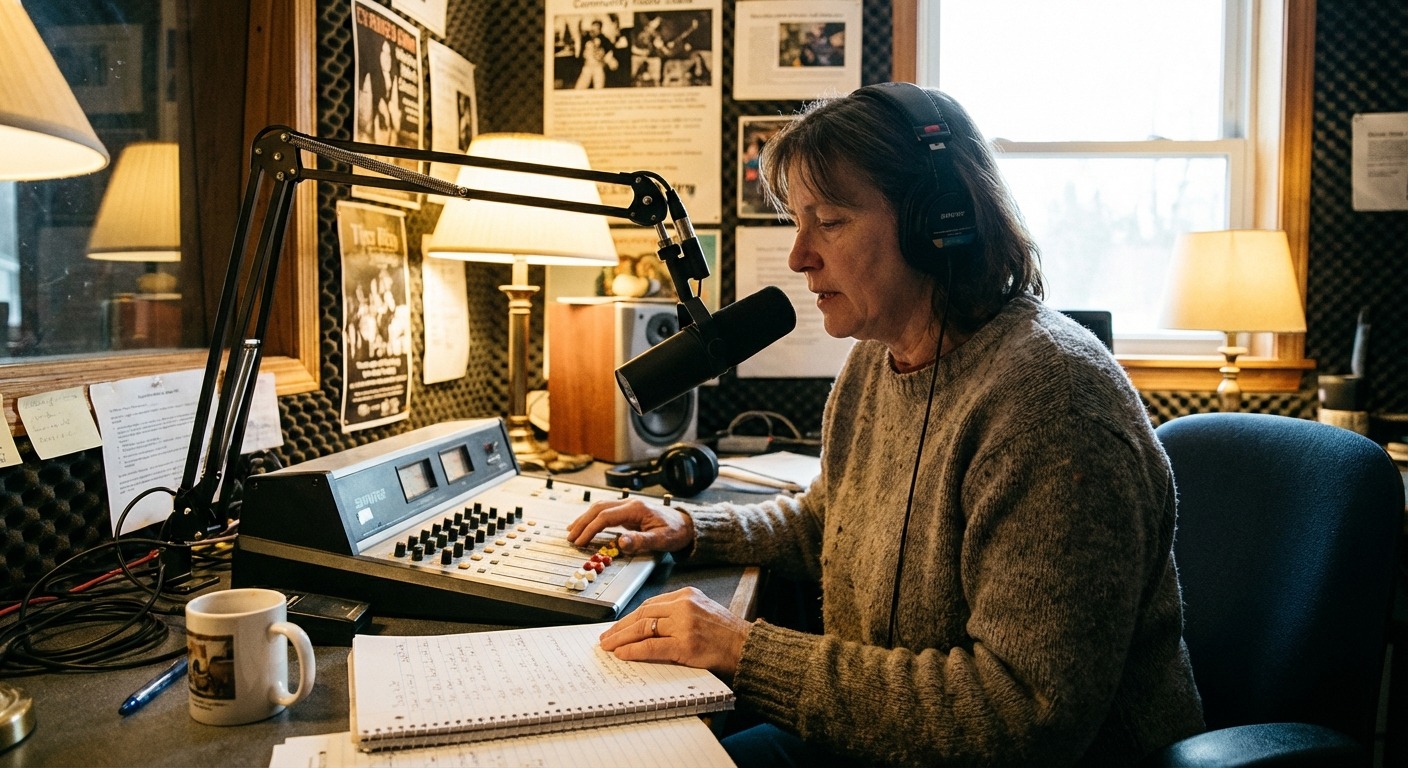
Volunteer organisations die from the bottom of the pyramid first. The board can hold together for years; what fails earlier is the inflow of new programmers, new technical hands, new board candidates. By the time the board notices the recruitment problem, the gap is usually a few years deep.
The volunteer-radio networks that recruit well share a few habits:
An actual on-ramp. A clear, advertised path from "I'm interested" to "I have a show". Most stations call this an orientation or a training. Whatever you call it, run it on a published schedule, not on demand.
Forgiving early shifts. Sunday morning at 6 a.m., overnight automation cover, recorded contributions to existing shows. New volunteers need places to fail without breaking anything important.
Deliberate connection to feeder communities. Campus stations recruit through the campus club fair. Community stations recruit through the local public library, the literacy council, the seniors' centre, the cultural associations. Recruitment is an outreach activity, not a posting on a website.
Recognition that costs nothing. An annual volunteer dinner. A name on the website. A handwritten card after five years. People keep showing up where they feel seen.
The technical side: keep the stack repairable
Packet-radio networks ran for decades on a principle the modern community-radio sector forgets at its peril: build with parts that any reasonably technical volunteer can swap out at 2 a.m. without a vendor support call.
This means standard interfaces. Documented configurations. Open-source where possible (Icecast, Liquidsoap, Rivendell, AzuraCast all qualify). Spare parts on the shelf. A wiring binder near the rack. A photo of the working configuration before anyone touches anything.
It also means resisting the temptation to put the whole station behind a single proprietary appliance because the salesperson was pleasant. When that appliance fails outside its support window, the station goes silent. We discuss the design principles further in why distributed networks still matter and from packet to digital networks.
Conflict, and the policies you wish you'd written earlier
Every volunteer organisation has conflict. The healthy ones have written policies in place before the conflict happens; the unhealthy ones write the policy in response to a specific person, which never goes well.
The minimum policy set for a volunteer broadcaster includes: a code of conduct for on-air and off-air behaviour; a complaints procedure with a named recipient who is not the person being complained about; a clear process for suspending or removing a volunteer, with appeal; a conflict-of-interest declaration for board members; and a programming policy that makes clear what is and isn't allowed on air (Canadian content rules, hate-speech prohibitions, election-period balance, and so on).
The CRTC's broadcasting framework, the Canadian Broadcast Standards Council's codes, and the model policies circulated through the community-radio sector cover most of this. You don't have to invent it. You do have to adopt it before you need it.
Money, candidly
Volunteer broadcasters tend to underprice themselves. The common pattern is a station that runs on goodwill, hits a crisis (a transmitter failure, a tower lease renegotiation, a key staff departure), and discovers it has no reserve fund and no fundraising muscle.
The stations that weather these shocks tend to do three things steadily over years: they hold a real annual fundraiser with a public goal; they cultivate a small group of monthly donors who give predictably; and they apply for project grants on a rhythm, not in panic. The Department of Canadian Heritage's community media programs, provincial trillium-style funds, and local community foundations all give to community broadcasters that ask competently.
For a station that is mostly online and looking at the cost picture, our notes on local streaming infrastructure walk through the recurring lines.
Burnout is the real failure mode
Most volunteer-broadcasting organisations don't fail because they lose their licence or their transmitter. They fail because the three or four people who actually do the work get tired, and there isn't a next layer behind them.
The defences against this are unglamorous. Rotate critical roles on a known schedule. Don't let the same person be board chair, technical lead, and Saturday morning host for six years running, even if they want to. Build a culture where stepping back from a role is treated as a normal life event and not a betrayal. Celebrate the people who do step back; they make it easier for the next person to do the same when their turn comes.
The packet-radio operators we cover in the Southern Ontario node archive figured this out informally. The nodes that ran longest were the ones with two or three sysops sharing the load, not the ones built around a single hero.
Succession, in the boring sense
Succession planning sounds corporate. In a volunteer broadcaster it just means: who runs this when the current person stops? The honest answer at most stations is "we'll figure it out", which is not a plan. The stations that handle leadership transitions cleanly tend to have written role descriptions for board positions, a nominations process that runs every year (not just when there's a vacancy), and a rolling expectation that nobody holds a critical role for more than two consecutive terms without an active conversation about handover.
The same applies to the technical side. The volunteer who built the audio chain ten years ago is not going to be the volunteer who maintains it ten years from now. Plan the handover before it's forced on you. Pair the long-time technical lead with a younger volunteer for a year before they step back, not the week after.
What the work is for
None of this is the romantic part. The romantic part is the show going to air, the listener phone call, the live remote from the fall fair, the moment when someone says they heard something on the station that mattered to them. That is the actual product.
The governance, the recruiting, the technical discipline, the policies, the fundraising — all of it exists so the romantic part can keep happening, week after week, year after year, decades after the people who started the station have moved on. That is what a volunteer-driven radio network is actually building. It's worth doing well.
For a wider context, see our how radio communities adapt page and the resources index.