PacketRadio.ca
Online Radio
Canadian Examples of Independent Community Audio Projects
A working tour of independent Canadian community audio projects: campus stations, town-scale community streams, archives and hybrid information-and-radio sites that sustain local audio outside the commercial dial.
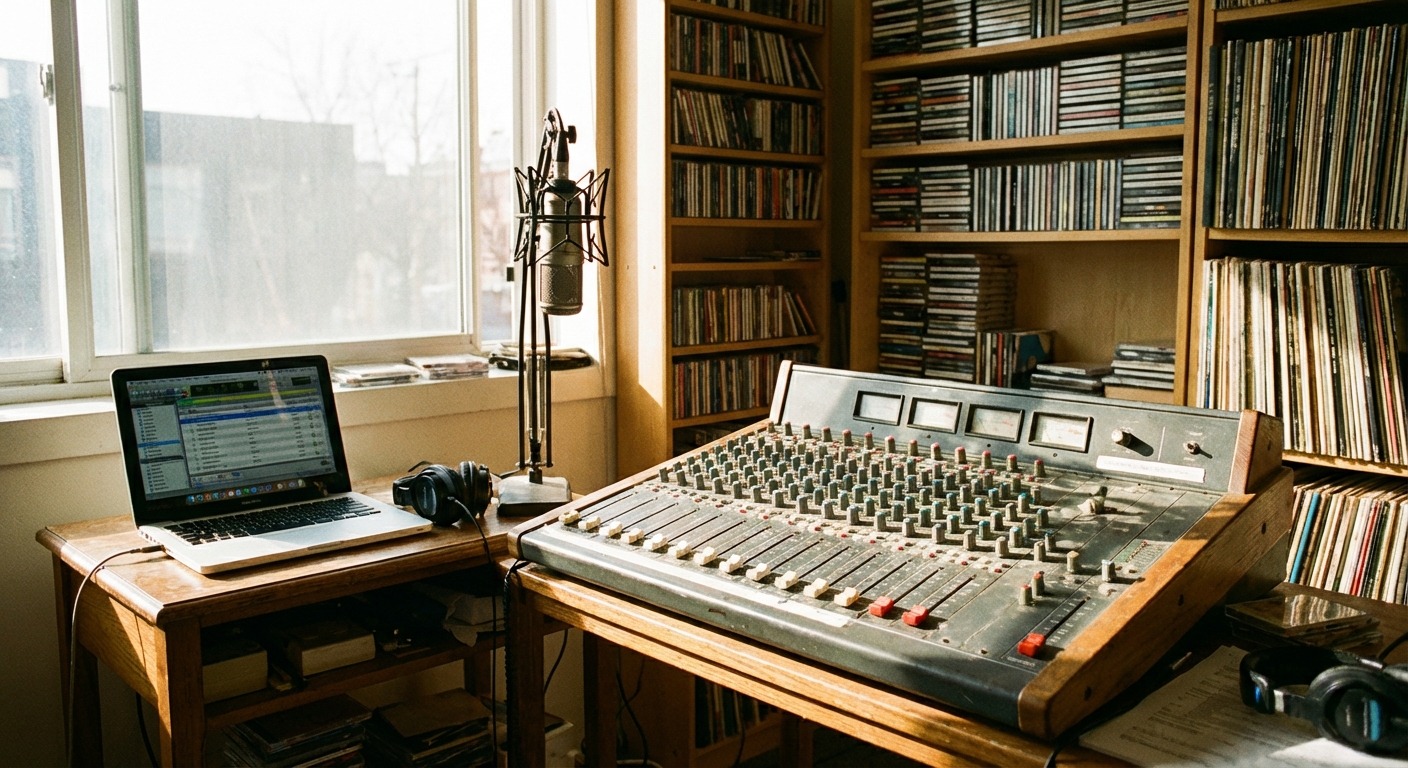
The Canadian community audio sector is larger and more interesting than the popular conversation usually admits. Most discussions of "Canadian radio" land on the commercial top-forty stations in the big markets, the public broadcaster, and one or two well-known campus operations. The actual landscape is much wider: a few dozen long-running campus and community FM stations, several hundred low-power and indigenous stations, an unknown but substantial number of online-only streams run by towns, neighbourhoods, language communities, churches and small collectives, and a small but important set of audio-archive projects that preserve the back catalogue of stations that have closed.
This piece is a working tour of that landscape, structured around the kinds of project that recur across the country. It is not exhaustive and does not try to be. The point is to make the diversity legible enough that someone planning a new station can see what shape their own project might take. We pair this overview with our walkthroughs on launching a small community station and the streaming infrastructure underneath.
The campus-community stations
The backbone of independent Canadian audio remains the campus-community sector. CKUT 90.3 in Montreal, CIUT 89.5 in Toronto, CKCU in Ottawa, CFRC in Kingston, CFRU in Guelph, CHUO in Ottawa's francophone east end, CKDU in Halifax, CJSW in Calgary, CITR in Vancouver: each of these is a real, licensed, decades-old station with a substantial local volunteer base, an FM signal that reaches its host city, and an online stream that effectively makes them international. Most are members of the National Campus and Community Radio Association, which has long served as the national policy and resource body for the sector.
What these stations share is a structural commitment to programming diversity that no commercial operation could profitably maintain. A typical week on a campus-community station might include three different language-of-broadcast slots, half a dozen niche music genres, a couple of public-affairs shows aimed at specific communities, an experimental-music block, and a current-affairs strand produced by students. The economics work because the labour is volunteer and the airtime is treated as a public commons rather than as inventory to be sold.
Indigenous and First Nation stations
A second major thread of Canadian community audio runs through the dozens of First Nation and Indigenous-language stations that have been on the air since the 1980s, many of them under the Native Communications Program or as part of regional Indigenous broadcasting societies. These stations carry programming in Cree, Anishinaabemowin, Inuktitut, Dene and other languages that almost nobody else broadcasts in, and they do work that has no equivalent in the commercial sector: language preservation, community announcements in the local idiom, ceremonial and seasonal programming, and a place for community members to be heard in their own voice.
The technical infrastructure varies enormously, from low-power transmitters in single communities to networked services covering large territories. The online stream, in many cases, has become the primary way that diaspora members of the community — people who have moved to cities for work or school — stay connected to the place. That use-case alone is a reason to take small online community audio seriously as cultural infrastructure rather than as a hobbyist project.
Town-scale community streams
Below the licensed FM tier sits a layer of small-town and small-city community streams that operate entirely online under the CRTC's Online Undertakings exemption. These are usually run by a small group of volunteers under the umbrella of a local non-profit, a service club, a township recreation department, or a library board. They typically carry a mix of local-information programming, curated music, occasional live events, and re-broadcasts of council meetings or other civic content.
One useful current example is the Petawawa community media site, which combines a continuously running radio stream with a wider local-information hub for the town and surrounding area in the upper Ottawa Valley. The model — a single web property that bundles community announcements, local references and a streaming audio service together — is increasingly common in towns that are too small to sustain a standalone licensed broadcaster but too distinct to be served by regional or national content. The combined-hub approach also tends to be more sustainable than a stream-only project because the editorial work and the audience-building work reinforce each other.
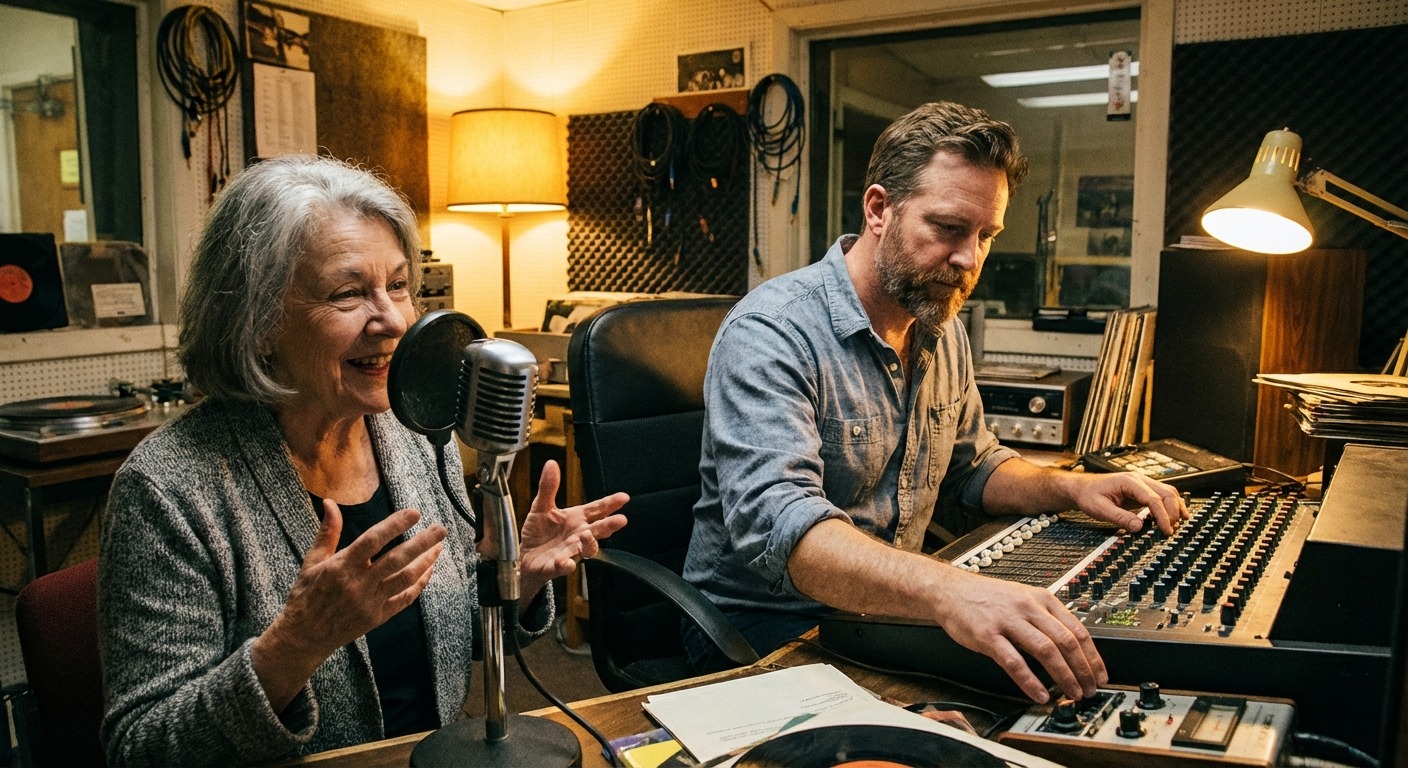
Other town-scale projects are quieter and harder to find by search alone — a neighbourhood stream out of a Toronto co-op, a francophone community service in northern Ontario, a Mennonite-community-oriented stream in southwestern Manitoba. Most of them never get written about. The fact that they keep running quietly is the point.
Diaspora and language community projects
A third strand of independent Canadian audio is the diaspora and language-community stream. These are operations — often based in Toronto, Montreal or Vancouver but serving a national and international audience — that broadcast in Tamil, Tagalog, Punjabi, Mandarin, Portuguese, Somali, Tigrinya, Polish, Ukrainian and dozens of other languages, with programming aimed at the specific Canadian community that speaks each language. CHRY/Vibe 105 in Toronto has historically carried a substantial Caribbean-Canadian programming strand, and a number of multilingual commercial and community operations across the GTA cover languages that no English-language commercial station would touch.
The infrastructure question for these projects is interesting because the audience is geographically dispersed and the programming is often time-shifted to suit listening patterns in the home country as well as in Canada. The online stream, the on-demand archive and the social-platform clip are usually all in active use, with the radio stream itself acting more as a continuous bed than as the primary distribution channel.
Archive and preservation projects
A quieter but important fourth category is the archive project. When CKLN in Toronto lost its licence in 2011, a substantial portion of its programming history was preserved by volunteers and is still accessible through the Internet Archive and a handful of independent collections. Similar preservation work has been done for episodes of programmes from various closed and reduced stations across the country. The preservation is uneven, often unfunded, and depends heavily on individual archivists with personal stakes in the material.
For new projects there is a quiet lesson here: the audio you produce now is part of the future archive whether you intend it to be or not. A small amount of attention to file naming, retention and metadata at the time of recording will save an unknown future archivist enormous trouble. We touch on the parallels with packet-radio log preservation in our archive of the Southern Ontario node network.
Hybrid civic-information projects
The fastest-growing category is probably the hybrid project that mixes audio with other forms of community information. A municipality runs a livestream of council meetings and combines it with a local-events calendar. A library hosts a podcast feed and embeds it on its events page. A community foundation runs a quarterly long-form interview series and pairs it with written transcripts. None of these are radio in the traditional sense and none of them want to be. They are using audio as one component of a wider civic-information offer.
This category is harder to count than any of the others because it does not present itself as "a station." The person running it is usually a communications coordinator or a volunteer with a podcasting setup. The aggregate effect across the country is substantial. A great deal of the audio that small-town Canadians actually consume in 2026 lives in this hybrid category rather than on a traditional radio dial. We argue the broader cultural case for this work in why local online radio still matters in smaller towns.
What ties them together
The projects covered above look very different on the surface. A multilingual Toronto station has almost nothing in common operationally with a one-host stream out of a small Ottawa Valley town. What links them is a shared posture: the assumption that a community is owed an audio channel that it controls itself, rather than one that is delivered to it from elsewhere. That posture is older than any of the technology involved. It is the same instinct that drove the original campus broadcasters in the 1960s and 1970s, the volunteer packet-radio coordinators of the 1980s and 1990s, and the open-source streaming infrastructure community of the 2010s and 2020s.
If you are starting a new project, the practical implication is encouraging: you are joining a long line of people who have made similar decisions for similar reasons, and the documentation, the software, the legal framework and the peer support are all genuinely available. Start small, document everything, and treat the project as the long-running thing it will become. For broader context on the volunteer-organisational side of the work, see lessons from volunteer networks and our resources page for licensing and policy starting points.