PacketRadio.ca
Resilience & Backup
Backup Communications and Broadcast Resilience
How amateur radio infrastructure, public broadcasters, and emergency communications still overlap in Canada, and what 2026 stations should plan around.
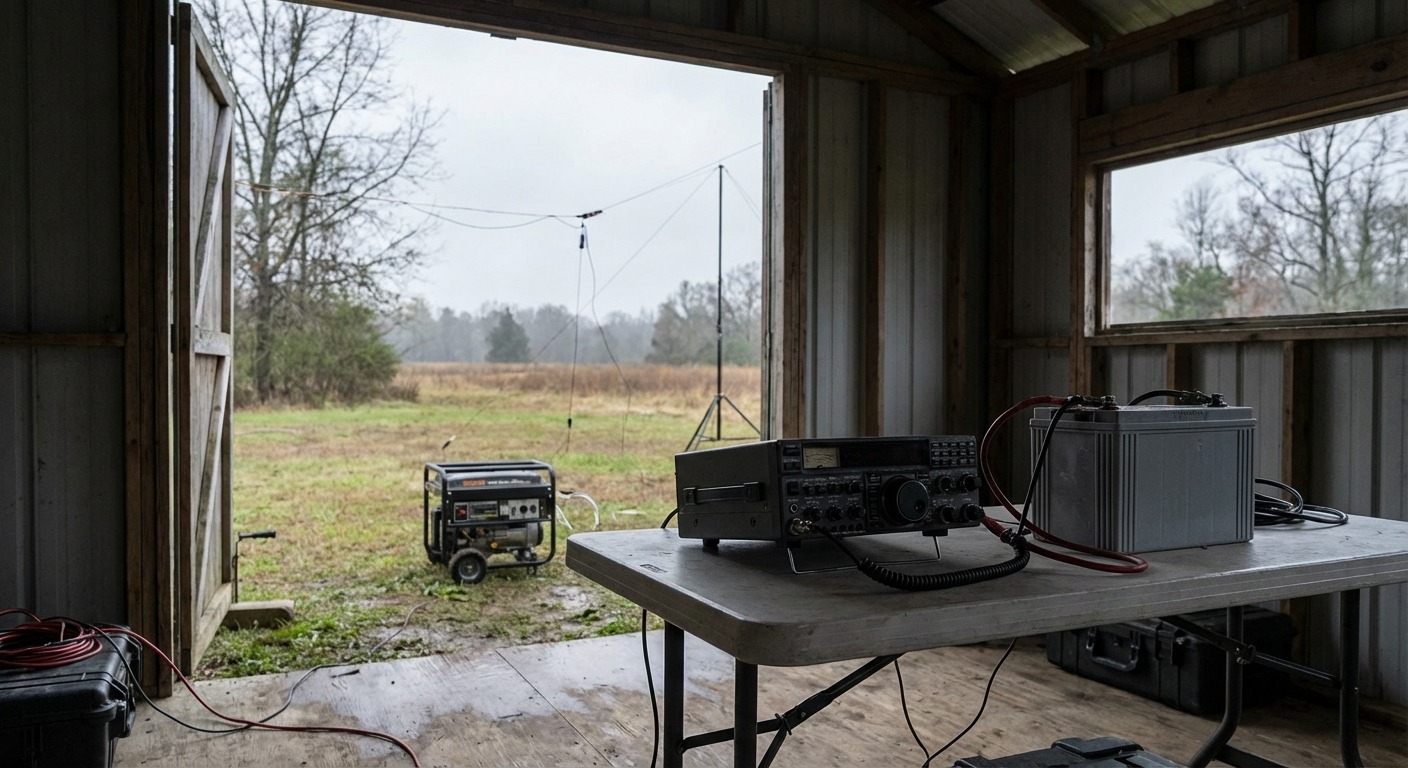
Every few years a storm or a fibre cut reminds Canadian broadcasters that the audio chain is longer and more fragile than the average listener thinks. A community FM station in a small town might depend on an unattended studio link, a leased data circuit, a third-party CDN for its stream, and a single rented utility pole for its power feed. Each of those links has its own failure mode, and the people who notice first are usually the operators sitting in front of dead VU meters at three in the morning.
This piece is a working overview of where backup communications, public broadcasting, and amateur infrastructure still cross paths in 2026. It is written for station managers, volunteer engineers, and the kind of curious listener who wonders why their local signal goes dark during a windstorm. It does not assume you hold an amateur licence, but it borrows from how amateurs have been thinking about resilience for the better part of a century.
The overlap that has not gone away
When packet radio was the way Southern Ontario hams moved bulletins and emergency traffic, the assumption was that the public phone system might fail and the network had to keep working anyway. That assumption did not age out. It just moved layers. Today the backbone is IP, but the failure modes are similar: a single upstream provider, a single power feed, a single antenna site. The Radio Amateurs of Canada Amateur Radio Emergency Service (ARES) still trains operators across the country to pass formal traffic when commercial systems are unavailable, and in many provinces ARES groups have written agreements with municipal emergency operations centres.
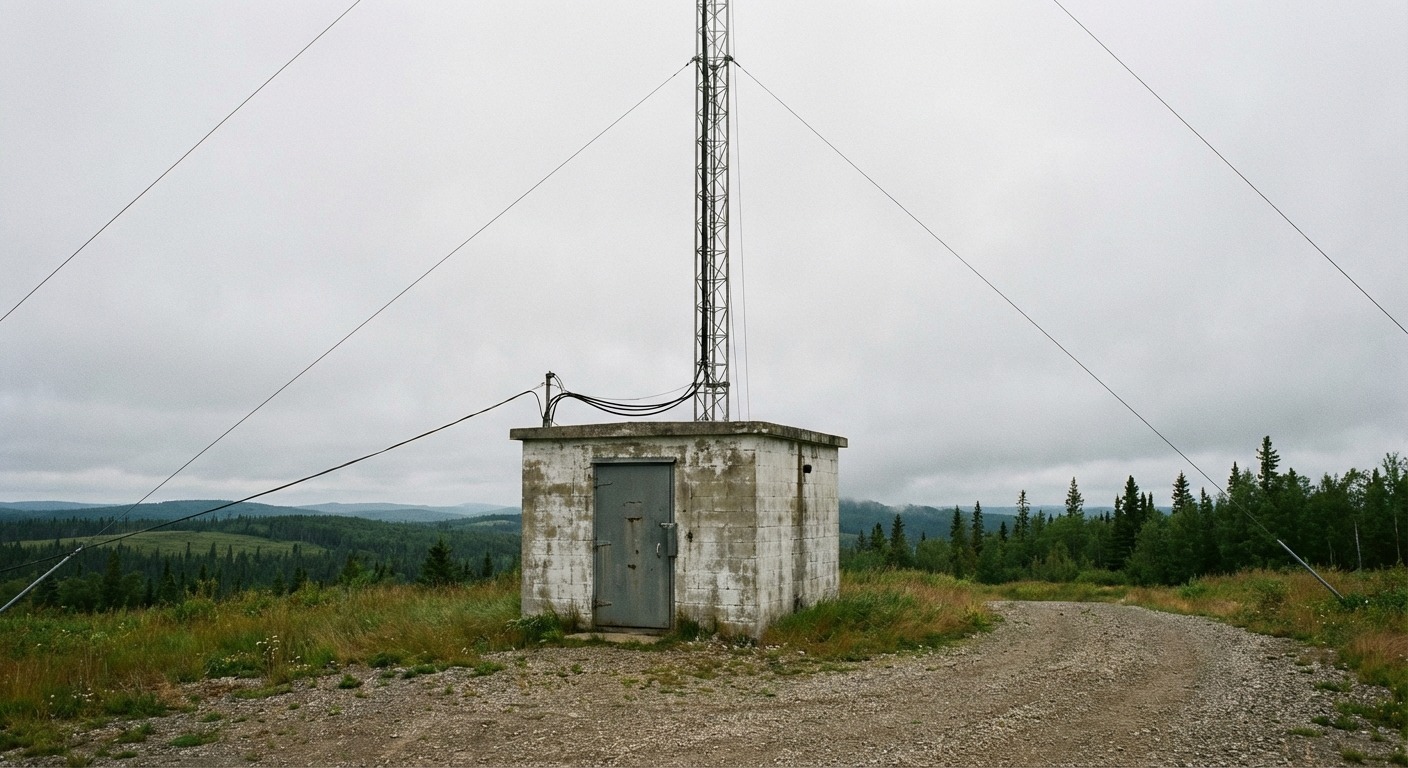
For a community broadcaster, the practical overlap is usually one of three things. An ARES group near the studio can deliver formal welfare messages out of an affected area when phones are saturated. A nearby amateur repeater on emergency power can carry coordination traffic between a station, its transmitter site, and field volunteers. And in some regions, the same tower that hosts a community FM antenna also hosts amateur gear, which means the people who maintain that tower already understand what it takes to keep the lights on after the grid goes down.
None of this is theoretical. The same questions that used to be answered with a 2 metre handheld and a packet TNC are now answered with a Winlink gateway, a battery-backed VHF repeater, and a small generator behind a transmitter shelter. The shape of the answer is what matters. We covered the longer arc of that shift in from packet to digital networks.
Alert Ready and the public alerting layer
Canada's Alert Ready system, formally the National Public Alerting System (NPAS), is the layer most listeners actually encounter. Issuing authorities at the federal, provincial, and territorial level send Common Alerting Protocol messages through Pelmorex; broadcasters and wireless carriers receive them and pass them through to the public. For an FM station this means an EAS-style decoder in the air chain that interrupts programming with the alert tone and the synthesised voice. For a small online stream, it means almost nothing, because online-only services are not part of the regulated chain.
That gap is worth sitting with. A community whose primary signal is an internet stream has, in regulatory terms, no public alerting obligation and no built-in path to receive one. A storm warning that interrupts the local FM is invisible on the same town's online channel unless the operator has manually wired in a feed. Some stations re-broadcast a Weatheradio Canada receiver as a fallback. Some monitor the alert feed via a secondary chain and inject it into the stream by hand. Most do nothing, because the stream feels modern and the assumption is that anyone who wants weather alerts has them on a phone.
Both assumptions can be wrong at once. Cellular networks degrade under load and lose battery backup faster than people expect. The CRTC has discussed alerting on online undertakings in passing, but as of early 2026 the obligation still tracks licensed broadcasters. If you operate an online-only project, treat alerting as an editorial choice you have to make actively rather than a service you inherit.
Weatheradio Canada and the underrated VHF backbone
Weatheradio Canada, run by Environment and Climate Change Canada, is a continuous VHF service broadcasting forecasts and warnings across the country on the standard 162.400 to 162.550 MHz band. It is unglamorous, it has been there for decades, and it is one of the few pieces of public infrastructure that still works when the cellular network is saturated and the local FM station is off the air. A receiver costs less than a tank of fuel and runs on batteries.
For a community station with a transmitter site somewhere outside the studio, a Weatheradio receiver at the site and another at the studio gives you an independent source for severe weather information that does not depend on your IP path. For volunteer-run online projects, a Weatheradio receiver in the studio gives a live human something authoritative to read on air when the automated alert chain is silent or absent. Pair that with a printed contact sheet for the nearest provincial emergency operations centre and you have, for almost no money, restored a lot of the resilience that the alerting infrastructure assumes.
What 2026 stations should be planning around
The threats that show up most often in after-action reports from the past several years are not exotic. They are climate-driven outages that last longer than the batteries, IP-only stations whose upstream provider goes down for hours, antennas that come off the tower in an ice load, and generators that will not start because nobody has run them under load since the spring. The fixes are mostly boring and mostly cheap relative to the cost of being off the air during the one event your audience will remember.
- Power
- A real generator at the transmitter site, fuelled, exercised monthly, and on a transfer switch that has been tested under load. UPS at the studio sized to run the air chain long enough to start the generator or to fail gracefully into a pre-recorded loop.
- Studio-to-transmitter link
- If your STL is IP over a single carrier, you have one link. A second path on a different medium, even a low-bitrate Opus stream over a separate ISP or LTE modem, turns a single point of failure into two.
- Antenna survivability
- Inspections after every major storm, not just the annual visit. Spare elements and a known-good backup antenna on the same tower at lower height. A documented procedure to drop to the backup without involving the tower crew.
- Stream ingress
- A second Icecast or shoutcast endpoint on a different network, with the encoder configured to fall over automatically. Icecast handles this natively if you set it up before you need it.
- Human chain
- A printed call list. A documented who-does-what-at-3am. A volunteer roster that includes at least one person who can physically reach the transmitter site in winter conditions.
None of that is glamorous. The National Campus and Community Radio Association has published practical emergency preparedness guidance over the years that covers most of it in more detail than fits here, and Public Safety Canada's GetPrepared.gc.ca is a reasonable starting point for the household-level thinking that your volunteers will need to have done before they can show up to help the station.
Where amateur infrastructure still helps
The piece of all of this that broadcasters most often miss is that a working amateur scene in the same region is itself a form of resilience. Repeaters on emergency power, operators who already know each other and have drilled together, a culture of message handling that does not require any one piece of commercial infrastructure to function. We wrote about this at more length in lessons from amateur infrastructure and the related why distributed networks still matter.
The practical step for a station manager is to find out who runs the local ARES group, attend a meeting, and offer the station as an information channel during exercises. Most groups will say yes immediately. The relationship costs almost nothing and the first time it matters it will matter a great deal.
A short checklist before the next storm season
Walk the transmitter site with a clipboard. Start the generator under load. Confirm the antenna inspection date. Check that your Alert Ready decoder is current and that someone has tested a real alert in the last six months. Confirm that your stream has a second endpoint and that your encoder will actually use it. Print the call list and put a copy at the studio, a copy at the transmitter shelter, and a copy in the car of whoever responds first. Talk to the local ARES group. None of this is new advice. It is the advice that the operators who stayed on the air during the last bad week kept giving to the ones who did not.
For the broader editorial frame on how broadcast, packet, and online services differ in their assumptions, see packet, broadcast, and online: the difference that matters. For the companion piece on how stations actually behave during an emergency once the planning is done, continue to radio, streaming, and community information in emergencies.