PacketRadio.ca
Online Radio
How a Small Community Can Launch Online Radio
A practical, Canadian-grounded guide to launching an online radio station for a small town: stack choices, costs, music licensing through SOCAN and Re:Sound, and what the CRTC does and does not require.
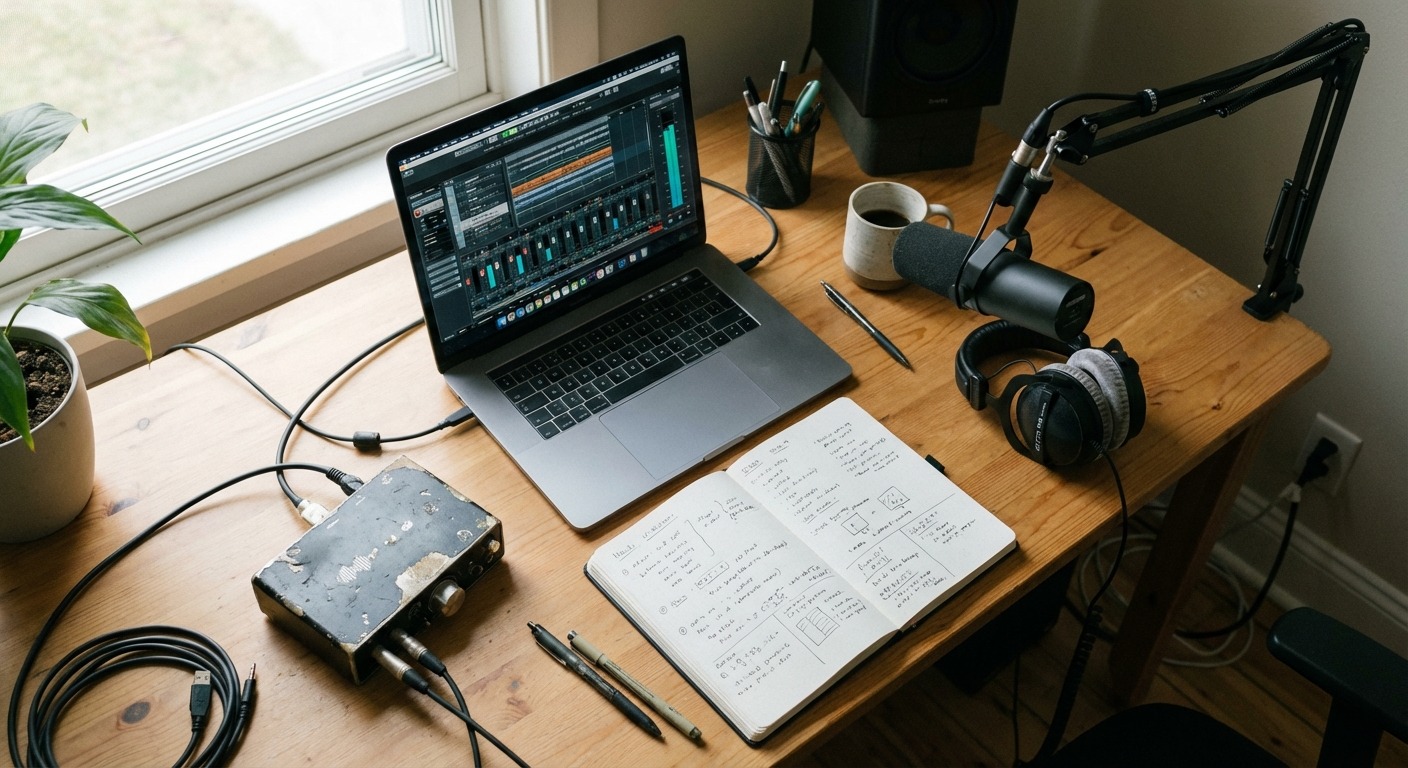
The cheapest way to get a small community on the air today is not on the air at all. It is online. A streaming station can run on a budget that would not cover the legal fees of an FM application, can be heard outside its town from day one, and — under current Canadian rules — does not require a CRTC broadcast licence so long as it stays inside the Online Undertakings exemption. None of that means the project is trivial. It means the obstacles are different from the ones a 1990s community FM applicant faced, and most of them are practical rather than regulatory.
This guide is written for the volunteer who has been asked to "look into starting a station" by a library board, a service club, a First Nation council, a township recreation committee, or a group of friends who are tired of hearing only national playlists when they drive home at night. It assumes nothing other than reasonable computer literacy and the willingness to read a licence agreement carefully.
Decide what kind of station you actually want
Before any equipment is purchased or any platform is signed up for, the founding group needs to agree on what the station is for. The technical answers depend on it. A station that exists to broadcast hockey games, council meetings and the occasional fundraiser concert has very different requirements from one that wants to play music twenty hours a day. A station that will run unattended overnight needs automation; a station that is only on when a host is in the chair does not. Write the brief down. Two paragraphs is enough. Without it, every later decision becomes an argument.
It also helps to be clear about the audience. Local-first stations — ones that expect most of their listeners to be in the home town — design differently from diaspora stations that expect most of their listeners to be elsewhere. Both are legitimate. Both can run on the same software. They will make different calls about scheduling, language, and how much weather and road information they push into the stream.
The basic technical stack
For a small online station the conventional stack in 2026 is some combination of three tools: Icecast as the streaming server that listeners connect to, Liquidsoap as the audio source that handles playlists, automation and live feeds, and optionally AzuraCast as a web interface that wraps the first two and adds a scheduler, listener stats and a station web page. You can run all three from a single small virtual server.
If the volunteers running the station are comfortable in a Linux shell, raw Icecast plus Liquidsoap is cheaper, more flexible and a useful skill to develop. If they are not, AzuraCast hides the rough edges and is friendly enough that a non-technical board member can swap a playlist or schedule a show without breaking anything. Either path produces an MP3 or AAC stream that any standard radio player can connect to. We compare the architectures in more detail in our piece on streaming infrastructure for independent local radio.
- Icecast
- Open-source streaming server. Accepts an audio source from an encoder and serves it to many listeners over HTTP. Mature, well-documented, runs on almost anything.
- Liquidsoap
- Audio scripting language and runtime. Builds the playlist, mixes in live shows, inserts station IDs, handles the silence-detection fallback that every station eventually needs.
- AzuraCast
- Self-hosted web platform that bundles Icecast, Liquidsoap and a database into a single installable package with a browser-based control panel.
- STL
- Studio-to-transmitter link. In an online context this is the path between wherever the host is broadcasting from and the streaming server — usually a dedicated encoder app or a browser-based source.
Realistic monthly costs
A modest online station can be run for under thirty dollars a month in hosting and bandwidth. A more ambitious one with multiple bitrates, a backup server and a separate web presence might land between fifty and eighty. Music licensing is separate, sits on top, and is non-negotiable if you play recorded commercial music. For a small Canadian non-commercial streaming service the combined SOCAN and Re:Sound tariffs are not large in absolute terms, but they need to be in the budget from the start, not added in panic six months in. Both SOCAN and Re:Sound publish the relevant tariff information; read both before you commit to a music-heavy format.
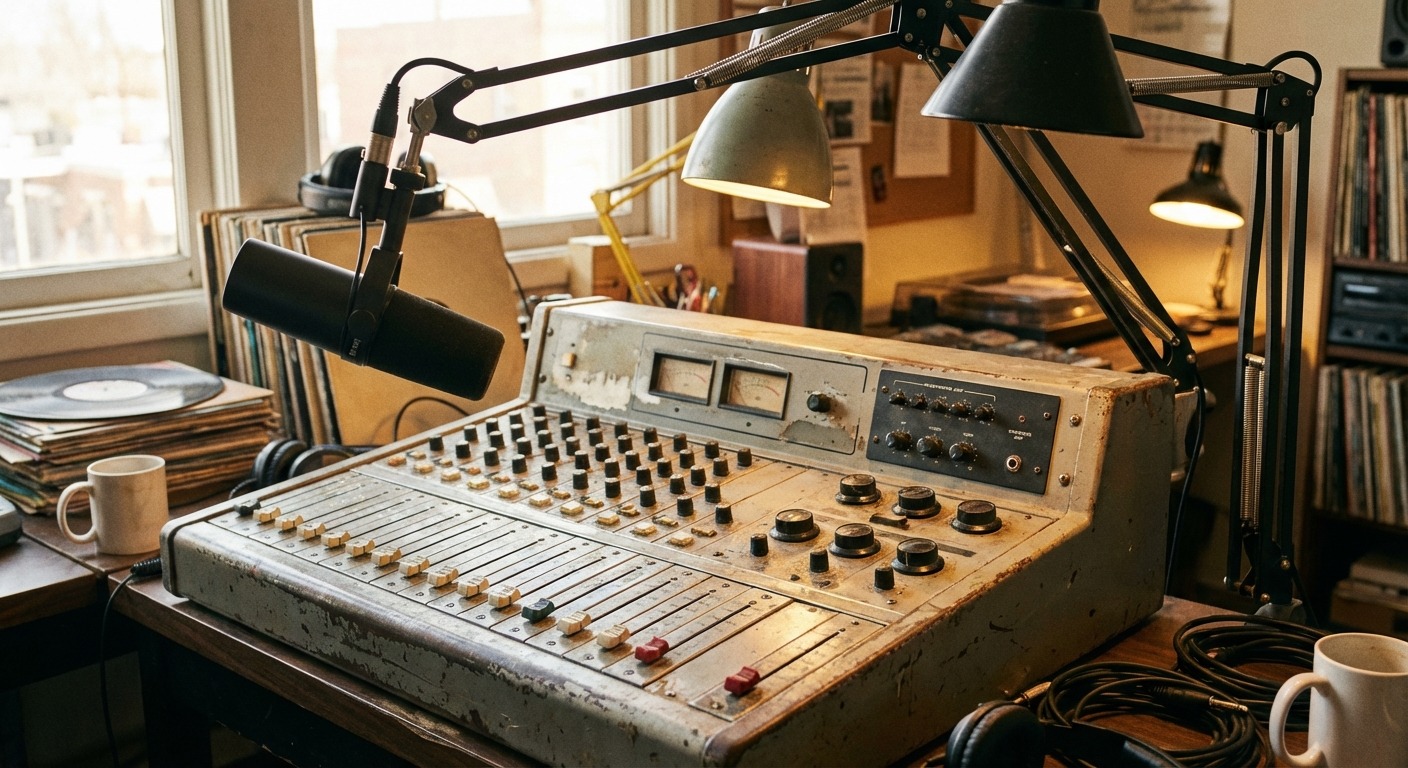
Hardware budgets at the small end can be modest. A decent USB condenser microphone, a basic four-channel mixer, a pair of headphones and a laptop will get a single host on the air with broadcast-acceptable quality. Spending more on the room — some absorption on the walls, a door that closes, a chair that does not creak — usually pays back faster than spending more on the microphone.
What the CRTC requires (and does not)
This is the question every founding committee asks first and gets wrong most often. In Canada, an audio service that operates only over the open internet generally falls under the CRTC's Digital Media Exemption Order, now restated as the Online Undertakings exemption. In plain terms: if you are streaming online and not also broadcasting on FM, AM or DAB, you do not file a licence application with the CRTC. You do, however, still owe music royalties to SOCAN (composers and publishers) and Re:Sound (performers and labels) for any commercial recordings you play, and you must respect copyright on spoken-word material as well.
If the station ever wants a low-power FM transmitter to cover the town centre, that is a different conversation and a different application. Many small online operations decide they do not need it. A clean stream and a couple of in-car radio apps in local use cover most of what an LPFM signal would, without the engineering cost.
Programming, automation and the silence problem
The hardest operational question for a new community station is what plays at three in the morning when no one is in the studio. Dead air sounds broken. A looping automated mix sounds lazy. The realistic middle path is a thoughtful overnight rotation built in Liquidsoap or AzuraCast, with a silence detector that swaps to a backup playlist if the live source drops. Set this up before launch, not after the first embarrassing outage. Most stations also schedule a single nightly automated station ID and a brief news or weather insert to keep the stream feeling tended-to.
Volunteer scheduling is its own discipline and tends to be the thing that quietly kills small stations in their second year. Write a rota. Honour it. Build a small bench of substitutes. The patterns we drew from amateur radio coordination work here too — we cover them in lessons from volunteer networks.
Where to host the server
Self-hosting a streaming server from a home internet connection is technically possible and almost always a mistake. Residential upload bandwidth, dynamic IPs, and the question of who reboots the box at 3 a.m. on a long weekend make it a poor first choice. The conventional answer is a small VPS from a Canadian or international provider, sized for the expected listener count. A station with peaks of 50 simultaneous listeners can run comfortably on a $10–15 CAD/month tier; one with peaks of 500 needs more thought about bandwidth pricing.
Keep a written record of every credential, every renewal date, every billing contact. The single most common reason a small station goes off the air for a week is that the volunteer who set up the hosting account left town and nobody else has the password. We have a longer treatment of this problem in building a low-cost online radio stack.
Launching, then sustaining
The launch itself is the easy part. A press release to the local paper, a posting at the library, a couple of Facebook posts and an opening live show usually fills the first month with attention. The harder work begins in month three, when the founding rush has worn off and the question becomes whether the station has a plausible programming pipeline for the next year. The stations that survive into year three tend to do three things consistently: they treat the schedule as a published commitment, they keep the technical stack boring and well-documented, and they invite new volunteers in faster than they can possibly need them.
None of this is novel. The rhythms of a sustainable small station look a lot like the rhythms of any other piece of community infrastructure — a curling rink, a food bank, a trail association. The medium happens to be sound. For the cultural argument behind why this is worth doing at all, see why local online radio still matters in smaller towns, and for the broader Canadian context, our overview of independent community audio projects across Canada.