PacketRadio.ca
Resilience & Backup
Radio, Streaming, and Community Information in Emergencies
How over-the-air radio, online streams, and amateur networks share the load when a Canadian community is cut off, and what a small station can actually do.
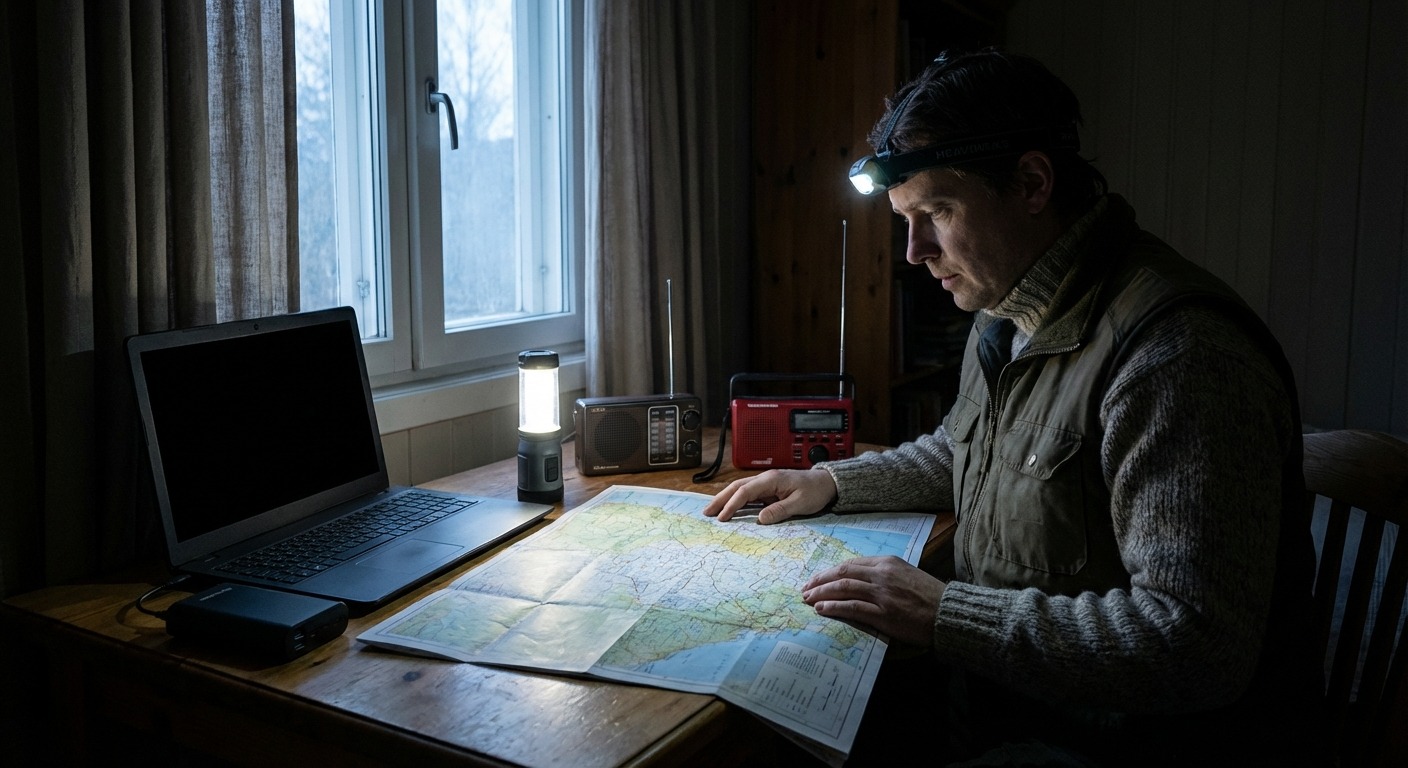
An emergency in a small Canadian community rarely looks like the one in the federal planning documents. There is no single dramatic event. There is a long ice storm, a wildfire that turns the highway into a one-way evacuation, a flood that takes out two bridges and a cell tower, a long heat dome with rolling outages. The shared characteristic is duration. People need information that is current, local, and trustworthy for hours and days, not for the thirty-second alert window.
This is the role that radio, in all its forms, has historically filled. It is also a role that quietly fragmented over the last twenty years as audiences moved between FM, satellite, podcasts, social platforms, and online streams. The 2026 question is not whether radio still matters in emergencies. It is which radio, on which medium, reaches which part of your community, and what a small station should be doing about it.
The three audiences a small station actually has
If you run a community FM with an online stream, you are serving at least three different audiences during a serious incident, and they behave differently.
The first is the over-the-air audience: car radios, kitchen radios, the battery set somebody dug out of a closet. This audience grows during outages because it is the only one that still works when the power and the internet are off. They want forecasts, road conditions, shelter locations, and authoritative repetition. They do not need novelty. They need to hear the same information again in twenty minutes when they tune back in.
The second is the streaming audience: people on phones and laptops, often displaced, often far enough from the affected area to have working connectivity but close enough to care. They want detail, links, social context, and the ability to share what they are hearing. A single-line text update on the station website is worth more to them than a long on-air read.
The third is the volunteer and operator audience: the people inside the station, the field reporters, the municipal contacts, the ARES operators if you have a relationship with them. Their channel is usually a combination of group chat, phone, and radio. They need clean, fast, formal traffic. The worst thing a station can do during an incident is mix this channel with its public output.
What goes on the air, and when
The instinct in a fast-moving incident is to stay live and talk. A more useful instinct is to stay live and read. Read the official statements from the issuing authority. Read the road closures from the provincial transportation feed. Read the shelter list from the municipality. Identify the source every time. Repeat the core information at predictable intervals, because the audience is rotating in and out and most of them will hear you for less than five minutes at a stretch.
Speculation is what destroys trust. If a rumour is circulating and you cannot confirm it, say so on air and move on. If the official source has gone quiet, say that too. The station that says "we have not heard anything new in the last twenty minutes; the last confirmed update was at 3:40 from the regional emergency coordinator" is doing more useful work than the station that fills the silence with guesses.
Programmatic music can stay if it is local and grounded. Pre-emptive cancellation of the regular schedule is sometimes useful, but a quiet station is also a station that nobody is listening to, and the next bulletin lands on empty ears. The middle ground is a clearly announced bulletin schedule on the half hour with normal programming in between, with the air staff briefed to break in if anything changes.
The streaming side: what actually fails
An online stream looks robust until you list the things that have to be working at once. Studio power. Studio internet. The path to your encoder. The encoder. The path to your Icecast or relay host. The relay host itself. The CDN if you have one. The listener's connectivity. Each of these is a separate vendor relationship, and during a regional event several of them are likely to be degraded simultaneously.
The first practical move is a second stream endpoint on a different network, configured as automatic failover. The second is a low-bitrate version of your main stream, 32 to 48 kbps Opus, that will get through congested mobile connections when the 128 kbps stream stalls. The third is a static fallback page on a host that is not your main site, so listeners who hit your domain when the studio is offline see a current status message rather than a blank screen. Mirror it on a free service you control if you have to.
For the longer-form view of how streaming infrastructure should be put together for small operators, we covered the stack in streaming infrastructure for local stations and the leaner end of it in a low-cost online radio stack.
Where amateur radio fills gaps
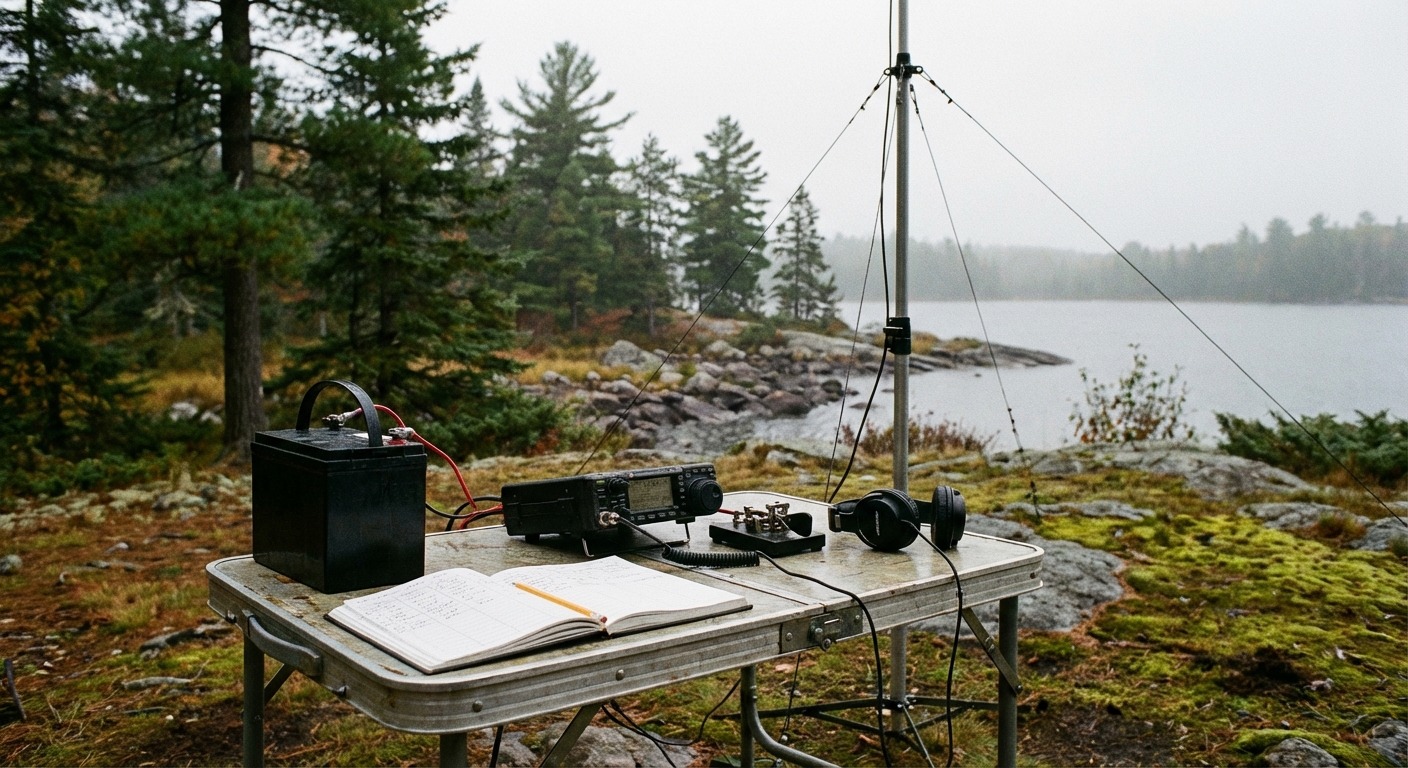
The amateur side of the picture has not gone anywhere. ARES groups in most Canadian regions are activated for severe weather, search and rescue, and large public events, and they are accustomed to working alongside municipal emergency services. For a community broadcaster, the practical interface is usually one of these:
- Welfare traffic
- When phones are saturated, ARES operators can pass formal "I am safe" messages out of an affected area. A station that announces this service on air, with a pickup point, is doing real public good.
- Field reporting
- Licensed volunteers with handhelds can report road and shelter conditions back to the studio over a local repeater, with discipline and source identification that a random social media post does not have.
- Coordination backup
- If the studio loses its commercial connectivity, a single VHF link to a station volunteer at the transmitter site or the municipal EOC keeps the air chain coordinated.
The cost of building these relationships before they are needed is a few coffees and a meeting. The cost of not having them when the cell network is down is much larger. We discussed the cultural side of this in lessons from volunteer networks, and the longer arc of how packet-era thinking still shapes this in APRS, BBS, AXIP, and NetROM.
Alert Ready, Weatheradio, and the limits of automation
Canada's Alert Ready system delivers public warnings to licensed broadcasters and wireless carriers via the Common Alerting Protocol. For a regulated FM station, an Alert Ready decoder is part of the air chain. For an online-only stream, there is no equivalent obligation and no inherited mechanism, which means alerting is something the operator has to build deliberately. The simplest reliable solution is a live person reading from a Weatheradio Canada VHF receiver in the studio.
Weatheradio Canada, run by Environment and Climate Change Canada, runs continuously on VHF across the country. A receiver costs almost nothing, runs on batteries, and gives you an authoritative source that is independent of your IP path. For overnight automation, some stations relay the Weatheradio signal directly into the air chain when severe weather alerts are active and revert to regular programming when they clear. That is a more useful piece of engineering than most station managers realise until the night they need it.
After the event: the part that matters most
The single most underused tool in community broadcasting is the after-action review. Sit down within a week of the incident with the volunteers who were on shift, a clean copy of the station log, a printout of the social channels, and an honest list of what worked and what did not. Where was the bulletin late? Where did the stream drop? Who could not get through to whom? Did the alerting chain trigger? Did anyone trip over a cable in the dark?
Write it down. Put it in a folder. Read it before the next incident. Most of the gains in resilience for a small station come not from buying more equipment but from doing this exercise twice and acting on what it shows. The companion engineering questions are covered in backup communications and broadcast resilience, and the broader editorial frame for what makes a community-driven station sustainable in the first place is in our case study on good local online radio.
Emergencies are not when you build the relationships, the redundancies, and the habits. They are when you find out which of them you actually have. The small stations that come out of a bad week with their audience intact are almost always the ones that did the unglamorous work months earlier. If you are not sure where to start, start with the call list and the generator. Everything else follows from there.