PacketRadio.ca
Community Broadcasting
Community Radio vs Online Radio: What Actually Changes
Licensed community FM and online stations share volunteer roots but differ in regulation, reach, and obligations. A practical comparison from a Canadian view.
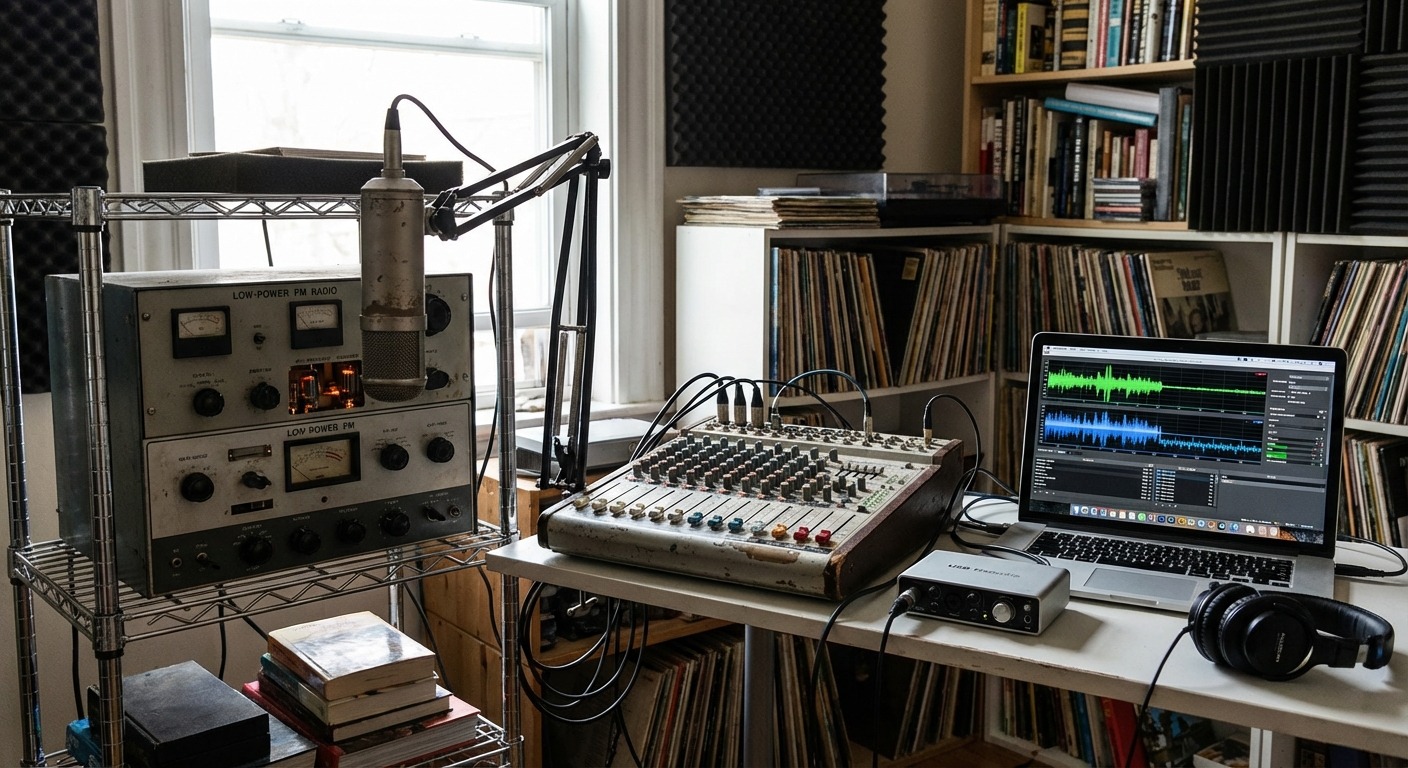
The phrase "community radio" gets used loosely. It can mean a licensed low-power FM station with a board of directors and a CRTC file number, or a kitchen-table internet stream run by three friends with a Rode mic and a Raspberry Pi. Both are legitimate. Both serve audiences. But they operate under genuinely different rules, and the differences matter the moment you start planning a schedule, signing on volunteers, or playing music you didn't write.
This page is for the volunteer programmer, the campus station manager, the small-town committee thinking about a sign-on, and anyone who has been asked the reasonable question: what's the actual difference, and which one should we be?
The legal frame, in plain language
In Canada, a community FM station is a broadcasting undertaking. It needs a licence from the CRTC, a technical certificate from ISED, and it pays into the music rights system through SOCAN, Re:Sound, CMRRA and related collectives. It files annual returns. It must comply with Canadian content quotas and the Broadcasting Act. Its frequency is coordinated and protected; nobody else gets to use it inside its protected contour.
An online radio station, by contrast, is an exempt undertaking under Canadian broadcasting law if it stays below certain revenue thresholds. There is no spectrum to apply for, no transmitter site to engineer, no antenna pattern to defend. You still owe music rights — streaming a copyrighted song to listeners is a public performance and you need licences for it — but the regulatory weight is dramatically lighter. You can be on the air, in some sense, this afternoon.
That contrast tempts people into a wrong conclusion: that online radio is just easier community radio. It isn't. It is a different craft with different obligations and different failure modes.
What FM still does better
An FM signal is broadcast in the strict sense: one transmitter, an unbounded number of receivers, no per-listener cost. A 50-watt community station with a decent antenna can blanket a town and several rural concessions for the cost of electricity. Add another listener and your bill doesn't change. That single fact shapes everything about the FM model — the funding, the audience expectation, the obligation to be there when somebody flips on the kitchen radio at 6 a.m.
FM also survives. When the cell tower goes down in an ice storm, the FM rig in the church basement keeps transmitting on its UPS and then its generator. We've written more about that under backup communications and broadcast resilience, but the short version is that broadcast infrastructure has a generation of hard-won engineering behind it. Online streams do not, by default.
And FM has a place in the dial. People still scan, especially in cars. A station that lives at 102.7 occupies real cognitive territory in the community. A URL does not, in the same way.
What online radio does that FM can't
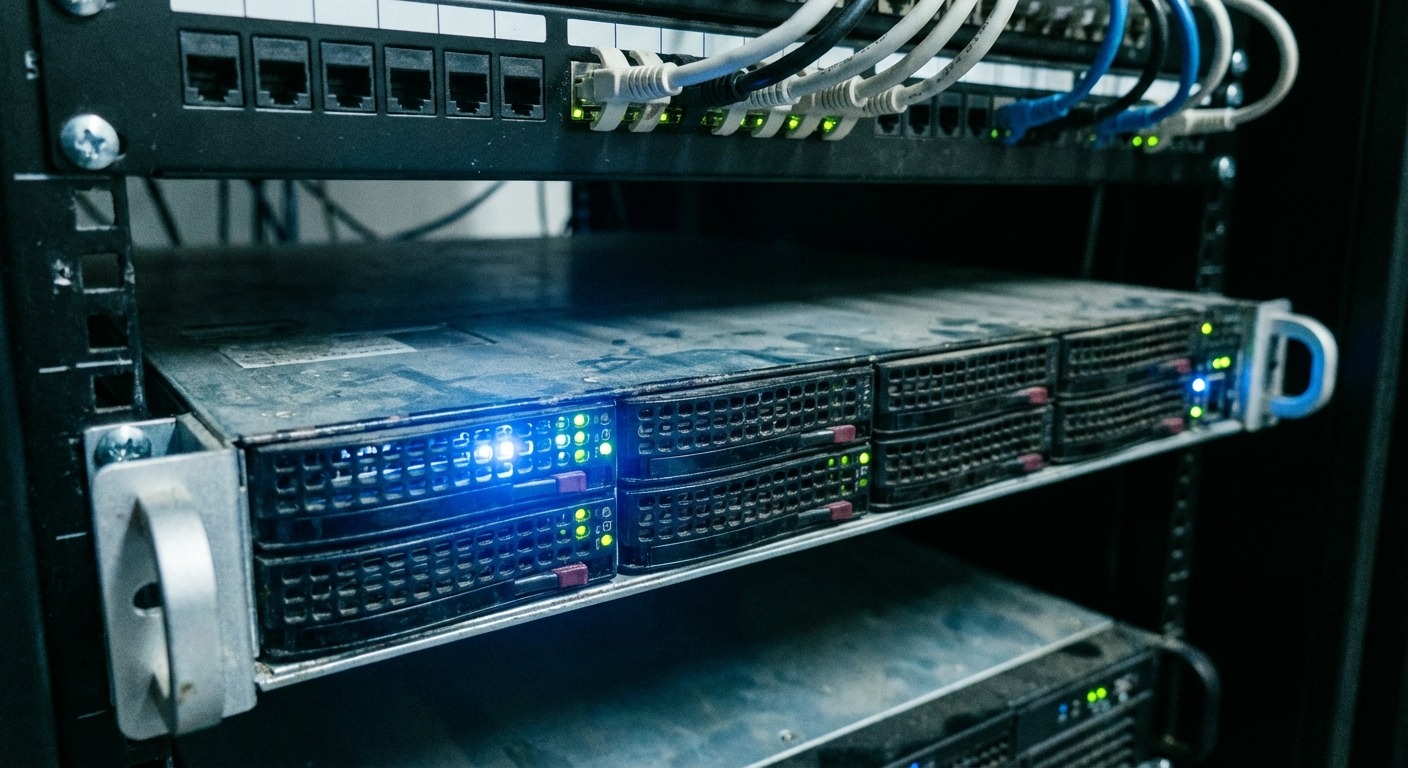
An online station has no contour. A Mi'kmaw-language program from Cape Breton can reach a listener in Yellowknife or Berlin without any coordination, any extra gear, any extra cost beyond bandwidth. For diasporic communities, niche genres, language programming, and any audience that is geographically spread, this is the killing argument for streaming.
Online radio is also cheap to start, cheap to iterate, and easy to take off the air without consequence. A community group can run a six-month seasonal stream around a festival and shut it down without filing anything. Try that with an FM licence.
And online formats let you do things FM regulation doesn't easily allow — long-form, niche scheduling, on-demand archives sitting beside the live stream, multiple parallel channels under one brand. Our notes on a low-cost online radio stack get into the technical pieces.
The hybrid model is the realistic answer
Most serious Canadian community broadcasters are now hybrids. The FM transmitter is the trunk; the stream is the limb that reaches everywhere else. The website hosts the show archive. The Mixcloud or Spreaker page extends shelf life. A modest mobile app or a TuneIn listing makes the station reachable to people who have moved away.
The National Campus and Community Radio Association has been candid for years that the future of campus and community radio is an FM-plus-online posture, not one or the other. Neither format alone covers the audience.
The real planning question is not "FM or online" but "what is each one for in our station?" FM is the local commitment. The stream is the diaspora and the archive. The website is the schedule and the donation form. The social channels are the discovery layer. None of them carry the full weight on their own.
Where the volunteer culture is the same
What both forms share — and what links community broadcasting back to the amateur radio tradition we cover in our SOPRA history and across the infrastructure pages — is the volunteer operator. A licensed campus station and a hobbyist online station are both run, mostly, by people who are not paid. They both depend on rotating volunteer programmers, a small core that fixes the gear, a board or collective that keeps the lights on, and a community of listeners who will give money once a year if you ask them properly.
Volunteer culture is the load-bearing wall of community broadcasting. Format choices sit on top of it. We get into the specifics on the lessons from volunteer networks page.
Costs you don't see at the start
- FM transmitter and antenna
- The visible cost. A small-town low-power install can come in under twenty thousand dollars including tower work, but the recurring tower lease is the ongoing line item.
- Music rights
- Required for both FM and online stations. Online tariffs scale with listeners; FM tariffs scale with revenue. Budget for both SOCAN and Re:Sound from day one.
- Bandwidth and CDN
- An online-only station's main recurring cost. A modest stream is cheap; a popular one isn't. Plan for at least one cost spike when a show goes well.
- Insurance and incorporation
- If you have volunteers in a building, you need general liability. If you accept donations, you almost certainly want non-profit incorporation. Both formats need this; neither set of rules forgives skipping it.
- Studio gear that doesn't fail at 2 a.m.
- The single most underestimated line. Broadcast-grade mixers, processors and automation are expensive because they run for years without attention. Consumer gear doesn't.
Reach is not the same as audience
One of the easier mistakes in early-stage community broadcasting is to confuse potential reach with actual audience. An online stream is technically reachable from anywhere on the open internet. That doesn't mean anyone is listening from anywhere. In practice, an online community station's listener base is usually still local — the same town the FM signal would have covered — plus a thin tail of former residents and family members in other cities. The geographic miracle of the internet does not, by itself, produce listeners.
FM, conversely, has a hard reach limit (the protected contour) but a much higher conversion rate inside that limit. People who live inside an FM signal's coverage area, who listen to radio at all, will eventually find the local community station. People scattered across an unbounded online catchment have to be told, repeatedly, that you exist. Audience-building is the actual work in both cases. The mediums make different parts of it harder.
Choosing well, not just choosing
If your community is geographically tight and your audience is local — a town, a campus, a defined neighbourhood — FM is still the format that earns you a seat at the table. The licensing process is real work, but it confers a kind of permanence and civic standing that an online stream alone won't.
If your audience is dispersed, niche, or speaks a language not widely served on the dial, online is the right starting point. Build the audience first, prove you can hold a schedule, and then ask whether FM adds anything you don't already have.
If you can do both — and most maturing community broadcasters end up doing both — design the FM signal for the local commitment and the stream for the wider reach. Don't treat the stream as an afterthought. The people listening on a phone at lunch are no less your audience than the people listening on a kitchen radio at breakfast.
For more on how the formats connect, see our notes on packet, broadcast and online differences, and the working case study we keep updated.