PacketRadio.ca
Case Studies
What Makes a Good Local Online Radio Project
A careful editorial study of the qualities and operational practices that distinguish a sustainable community-driven online station from one that fades after eighteen months.
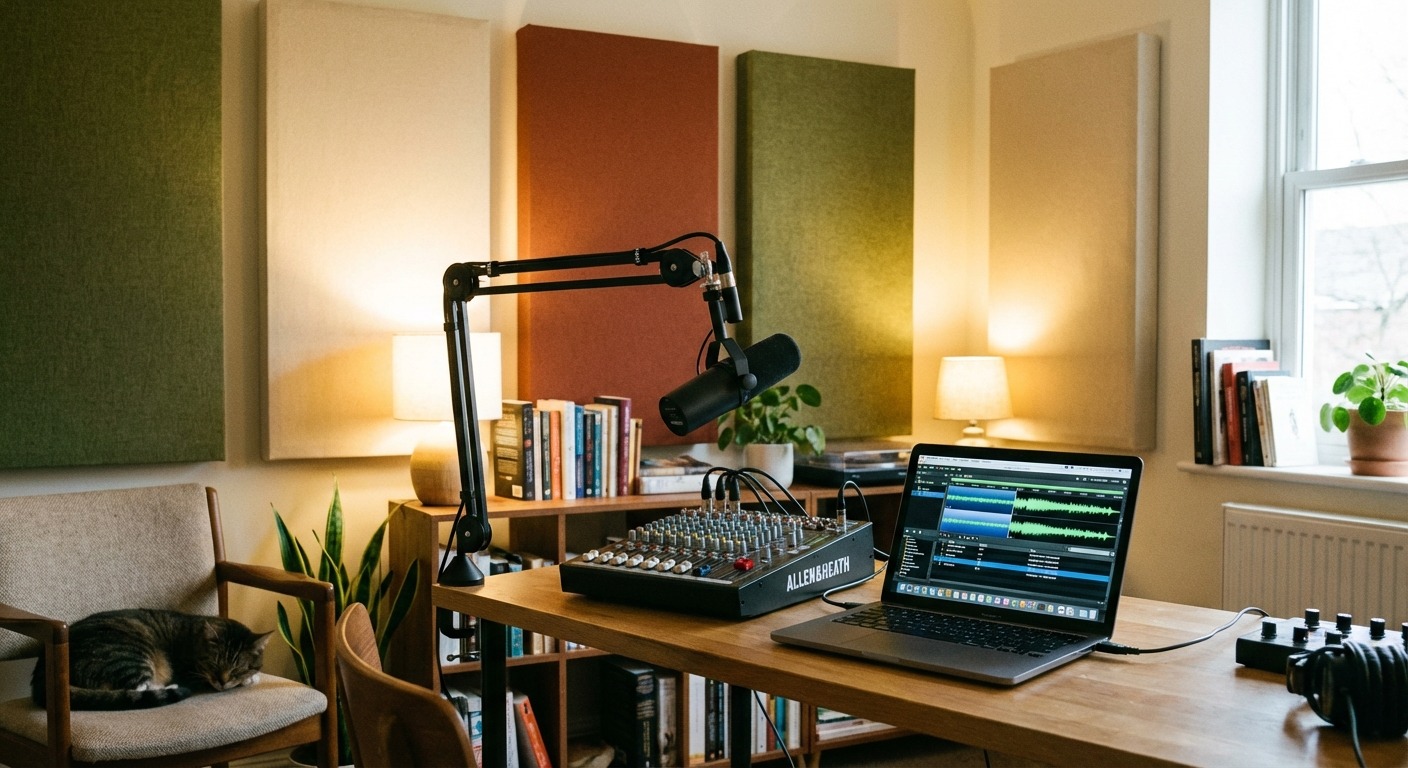
Most online radio projects do not fail. They fade. Eighteen months in, the founder has a new job, two of the regular hosts have stopped showing up, the donation page has not been updated since launch, and the stream is still technically running but nobody who is not personally connected to it is listening. The equipment works. The website works. The project has stopped.
This is a study of why some projects do not fade. It is not a profile of any specific station, although the established Canadian campus and community signals — CKUT in Montreal, CFRC in Kingston, CFUV in Victoria, CITR in Vancouver — sit in the background as reference points. The qualities that let those signals run for decades are not all financial. Several are reproducible at the volunteer scale.
A clear answer to "what is this for"
The first thing the surviving projects have in common is a sentence everyone involved can say the same way. Not a mission statement in the bureaucratic sense. A working answer to "what is this station actually for". A station that exists to broadcast the music and voices of one specific neighbourhood. A station that exists to give a regional language community its own audio space. A station that exists to cover one underserved music scene in a city that has lost its other outlets for it.
The projects that fade tend to have a vaguer answer. "Independent music and local voices" is not an answer; it is a category. When the founder gets tired, the people remaining cannot agree on what they are for, because they joined for different reasons. A narrow purpose holds a small group together through the slow stretches better than a wide one holds a large group. The community side of this is covered in community vs online radio and how regional audio builds identity.
A schedule that admits what it can sustain
Twenty-four-hour live programming is a fantasy at the volunteer scale. Every project that tries it either burns out its core people or quietly collapses into automation that pretends to be live. The honest version is a clearly published schedule of live blocks, perhaps four or five evenings a week and two or three weekend afternoons, with the rest filled by a curated automated rotation of recent shows, locally produced features, and an identified music library.
The audience adapts to a real schedule faster than founders expect. People learn that the local food show is on Wednesdays at seven and tune in for it. A station whose live moments are predictable feels alive. A station that is technically streaming around the clock but where you cannot tell whether anyone is in the room feels like a database with a domain name.
More than one person who can do every important thing
The technical bus factor of a small station is almost always one. One person knows how the encoder is configured. One person has the credentials for the streaming host. One person is the only one who can actually edit the website. When that person moves, takes a sabbatical, or simply gets tired, the project enters a slow decline that everyone can see and nobody can stop.
The projects that survive deliberately train at least one backup for every operational role. Not as a formality. As an active practice. The second person actually does the encoder restart sometimes. The second person actually publishes a show. The credentials are in a shared password manager that more than one trustee can open. None of this is glamorous and it is the single most reliable predictor of whether a station is still on the air in three years.
A real relationship with a place
A community online station that does not interact with the physical place it claims to serve will not last. The interaction does not have to be elaborate. A monthly open studio. A presence at the local farmers' market with a remote broadcast. A standing relationship with one or two venues to record live sessions. A regular spot on the local library's events calendar.
The point is not promotion. The point is that the station becomes a thing in the place rather than a thing on the internet that happens to have the place's name on it. When something happens locally, the station is somewhere people think to call. That is the asset that does not appear on any technical diagram. We covered the operational side of getting started in launching a small community radio station.
Money that is small, slow, and honest
The projects that survive almost never have a single large funding source. They have a slow, modest stack: a few dozen monthly supporters at five or ten dollars, an annual fundraiser that brings in a few thousand, occasional small grants from arts councils or community foundations, perhaps a sponsorship arrangement with one or two local businesses on terms the station controls. The total is rarely impressive on paper. The shape is what matters.
The reason the slow stack survives is that no single source has the leverage to dictate programming, and no single source disappearing will end the station. The projects that fade have often had the opposite shape: one founder writing personal cheques, or one grant covering most of the year. When that source ends, the station ends, sometimes within months. The National Campus and Community Radio Association has written reasonable practical material on the funding side for member stations, and most of it scales down to the online-only project with very little adaptation.
Technical choices that age well
The surviving stations tend to have made boring technical choices. Icecast on a small VPS, with a known-good fallback. A second mountpoint at a lower bitrate. A static site or a quiet content management system that the second technical volunteer can also edit. Show archives published as plain MP3 files in a directory that any browser can list, often mirrored to the Internet Archive for long-term preservation.
The projects that fade tend to be the ones that built on a fashionable platform that has since pivoted, or that wrapped their entire identity in a hosted service that put their show archive behind a login. Three years later, the platform is gone or the pricing has tripled, and the work is either lost or held hostage. We laid out a practical reference stack in a low-cost online radio stack and the longer reasoning in streaming infrastructure for local stations.
- Documentation that exists
- A real wiki, even if it is just a folder of plain text files in shared storage. New volunteers can read themselves up to speed without having to interview the founder.
- An archive that is yours
- Show recordings stored on infrastructure you control, with a copy mirrored somewhere independent. The archive is the station's memory and will outlast any specific platform.
- A licence position you can defend
- If you play music, you have an honest answer to which Canadian collective societies you pay and on what basis. The answer might be small, but it exists. Operating without one is a slow-fuse problem.
- A plan for the day the founder leaves
- Not a tragic plan. A normal plan. Founders move, change jobs, have kids, get tired. The station has thought about it.
The intangible: a culture that lets new people in
The hardest quality to describe and the most decisive in practice is whether the station is the kind of place where a new volunteer in their twenties feels welcome to propose a show in the third week and is taken seriously. The stations that fade often have a quiet inner circle that politely deflects new energy until the new person stops trying. The stations that survive are the ones where the inner circle has noticed itself and is working against its own tendency to close.
This shows up in how meetings are run, in who speaks first, in whether the schedule has open slots newcomers can fill, in whether the founders will hand over their time slot to somebody better than them. The Canadian campus stations that have lasted decades are mostly the ones that worked out how to refresh their core every few years without losing their character. Smaller online projects need to do the same thing, faster, with fewer people. See lessons from volunteer networks.
A short test
For a quick test of whether a small online radio project is likely to last, ask whoever runs it three questions. Who is your audience and what would they miss if you stopped tomorrow. Who else can do the technical job you do. What is on your schedule three weeks from now. A clear answer to all three usually means the project is real. Vagueness on any one is the early warning that the eighteenth month will be the hard one.
The projects that matter most to their communities are usually the ones that took the boring questions seriously early. The audio quality, the studio, the website are the easy parts. The schedule, the bus factor, the relationship to a real place, and the slow honest funding stack decide whether the station is still here in five years. For the broader editorial frame, see why local still matters; for the operational companion on resilience, see backup communications and broadcast resilience.