PacketRadio.ca
Packet Radio Legacy
A Working History of SOPRA — Southern Ontario Packet Radio Association
How SOPRA coordinated AX.25 packet nodes, BBS forwarding, and 220 MHz backbone links across the Greater Toronto Area from the 1990s into the 2010s.
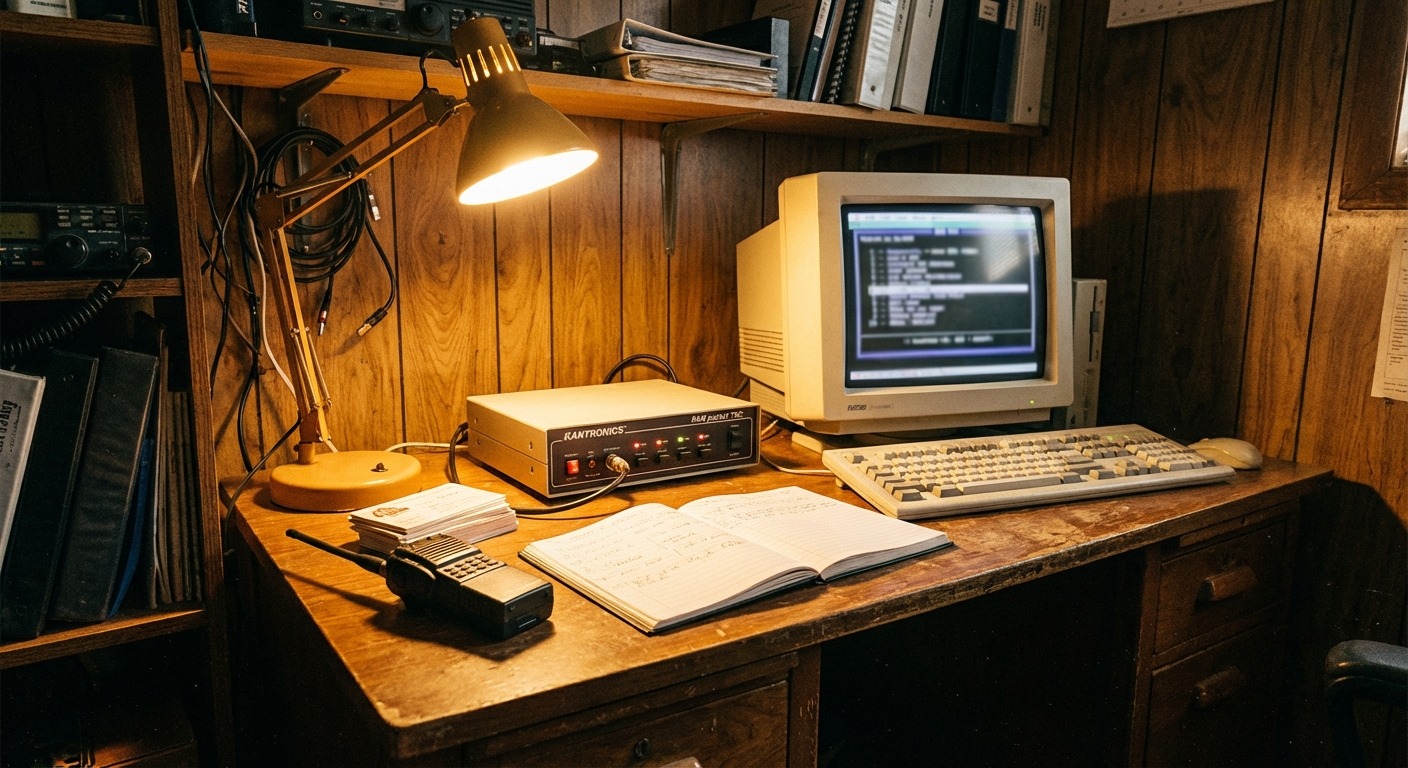
The Southern Ontario Packet Radio Association, Inc. — SOPRA — was the volunteer body that kept AX.25 packet networking running across the Greater Toronto Area for the better part of three decades. It was never a club in the social sense. It was an operating coordination group: a handful of licensed amateurs who owned tower space, antennas, duplexers, and node stack controllers, and who agreed on frequencies, link plans, and forwarding routes so that the system kept working as a system and not as a scatter of unrelated stations.
This page is a working history. It is not exhaustive and it is not romantic. It is what can be reconstructed from the surviving site copy, the network news that was posted on www.packetradio.ca through the 2010s, and the operating memory of people who ran the nodes. The site itself carried a quiet line at the bottom of every page: Copyright © 2010 - Southern Ontario Packet Radio Association. That line outlasted most of the BBS forwarding it described.
What SOPRA actually did
The association's job, in plain terms, was to make sure a user with a TNC in Mississauga could connect to a BBS in Acton, drop a message addressed to a callsign in Nova Scotia, and have that message arrive — eventually — without anyone having to manually relay it. That sentence sounds simple. The infrastructure behind it was not.
To make it work, SOPRA coordinated a list of things most users never had to think about: VHF and UHF channel assignments so that adjacent nodes did not desense each other; tower space at host sites willing to keep a TNC and radio powered around the clock; duplexers shared between APRS and user-port operation; backbone links on 220 MHz so that user traffic on 2 metres did not have to compete with forwarding traffic; and the routing tables in NET/ROM and JNOS that decided which neighbour to hand a packet to next. None of that was glamorous. All of it had to be agreed on, in writing or on the air, between operators who were each volunteering their own hardware.
The 220 MHz backbone
For most of SOPRA's active period the spine of the GTA network was a 220 MHz link path running roughly VE3INF ↔ VE3TDS ↔ VE3PKG ↔ VE3CON. That backbone is what made packet feel fast, in the relative sense of "fast" that 1200 and 9600 baud allow. It moved BBS forwarding traffic and inter-node routing off the user channels so that a casual operator with an HT and a TNC could still get a connect on 145.03 or 145.05 without sitting behind a wall of forwarding.
The backbone went down. By the time the site was last actively maintained, the VE3INF↔VE3TDS↔VE3PKG↔VE3CON path on 220 had been off the air for years, and the network news referenced a proposed VE3PRC↔VE3TDS link being worked on in cooperation with the GTA West ARES Packet Working Group and the Peel Amateur Radio Club. Whether that link ever came up the way it was planned is another question. The proposal alone tells you something about the era: people were still trying to fix the spine, not abandon it.
VE3INF and the Acton return
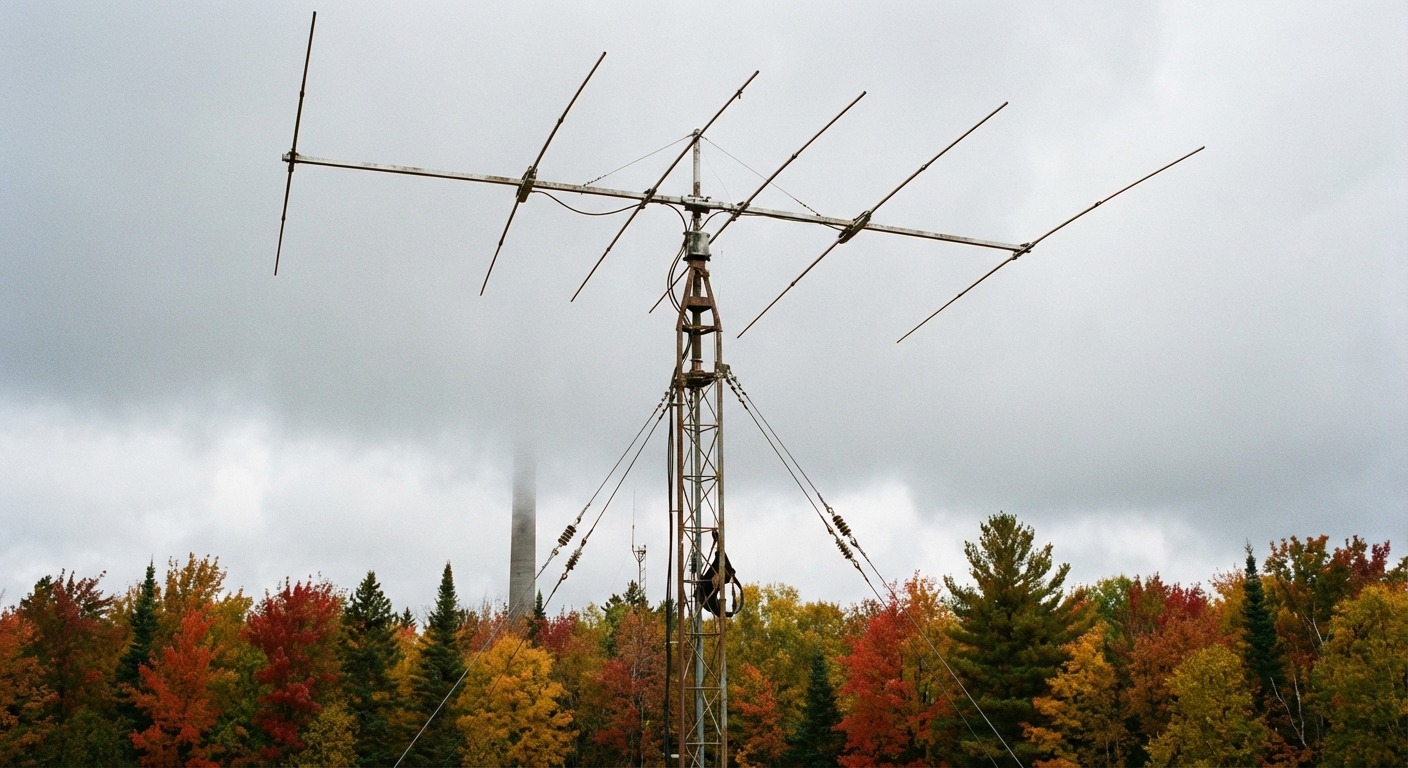
One of the more concrete entries in the network news was the return to the air of VE3INF, running JNOS from a new QTH in Acton and sharing an antenna with the VE3YAP APRS station via a re-tuned duplexer. That kind of detail is the texture of how the network actually ran — two stations on different functions, on different frequencies, sharing an aperture because tower space and feedline runs are expensive and someone took the time to re-tune a duplexer rather than put up a second mast.
VE3INF's BBS joined the ARRL Skipnet at a 300 bps gateway, which sounds slow now and was slow then, but mattered because Skipnet was the long-haul forwarding fabric for personal mail and bulletins across North America. There was also a successful test linking VE3INF to VA3BAL in Ballantrae via the user port at Ballantrae, and a proposal on the table to convert that into a real backbone link. Again: pieces of a network being patched and re-patched.
VE3CON and AXIP forwarding
The other major centre of activity in the late period was VE3CON in Toronto / Weston, on 145.03 MHz. The VE3CON BBS added AX.25-over-IP and NET/ROM links to a long list of other systems: VE3INF in Acton, VE3LHZ in Oshawa, WA7V in Washington state, AA6HF in California, VE3CGR in York Region, KA0MOS/VE1 in Nova Scotia, VE7TSI in BC, and VE3MCH in Hamilton. AXIP let those links hop over the public internet between the BBS endpoints, while still presenting native AX.25 to the local RF user. It was, in effect, the same trick a lot of community broadcasters use today: keep the local interface analog and friendly, run the long-haul over IP.
For a longer technical explanation of what AXIP, BBS, NET/ROM and APRS each did, see APRS, BBS, AXIP, NET/ROM — A Plain Explanation. For the snapshot of which nodes were operational and on which frequencies, see the Southern Ontario Node Archive.
Why the structure mattered
SOPRA was incorporated. That fact is small and important. An incorporated body could hold tower agreements, accept dues, and own equipment in a way an informal group could not. It is the same lesson that community broadcasters learn the hard way: technical coordination is real work, and real work needs a structure under it that survives the loss of any one volunteer.
The other lesson, which the surviving network news makes obvious, is that the network was always being maintained, not just operated. Re-tune the duplexer. Re-aim a Yagi. Bring a node back on at a new QTH. Patch one BBS to another over IP because the RF link you used to have is gone. None of that is exciting. All of it is the actual work. A lot of what amateur infrastructure has to teach broadcasters comes out of exactly this register.
Coordination with ARES and the clubs
SOPRA was never the only amateur organisation operating in the GTA, and the smarter parts of its work happened in coordination with neighbouring groups rather than in isolation. The Amateur Radio Emergency Service — ARES — has its own packet working groups in this part of the province, and the proposed VE3PRC↔VE3TDS 220 MHz link sat at exactly that intersection: a backbone segment that would carry SOPRA forwarding traffic in normal operation and would also be available as a digital path for ARES traffic in an event. The Peel Amateur Radio Club brought tower space, operating volunteers, and a club call into the same plan.
That kind of overlap is normal in amateur infrastructure, and it is worth being honest about. The same operator might be a SOPRA member on Tuesday, an ARES volunteer on Wednesday, and a club net controller on Thursday. The hardware does not care which hat the operator is wearing. The coordination paperwork — who is allowed to key which transmitter, who pays for what, who is responsible if a tower fails — does care, and it is that paperwork that makes incorporation valuable. SOPRA being a corporation meant the agreements with site hosts, club partners, and ARES coordinators could be signed by an entity, not by an individual whose involvement might end.
For a broader treatment of how volunteer coordination scales — and where it breaks — see Lessons from Volunteer Networks. The patterns are the same whether the volunteers are running a 220 MHz packet backbone or a community radio station programme grid.
What is left now
Some of the nodes are off the air. Some are on the air with reduced footprint. APRS continues, because APRS has its own gravitational pull and feeds modern TAPR-adjacent projects. The BBS culture has thinned, but messages still move on the systems that are still up. The 220 MHz backbone, in the form that ran for years, is gone in its old shape, and the site itself is now an editorial archive rather than an operational coordination page.
What we are doing here, on the same domain, is keeping the record. The PacketRadio.ca homepage explains the editorial scope; the about page explains the bridge from packet to community broadcasting infrastructure that the rest of the site walks through. SOPRA's name still appears at the bottom of every page on this site for a reason. The work it did is the reason any of this matters.
Reading the surviving record
Most of what is documented here comes from three sources. The first is the network news that was posted on www.packetradio.ca through the 2010s, which functioned as a running operating log: which node had moved QTH, which duplexer had been re-tuned, which forwarding link had been added or lost. The second is the node list, which appeared in tabular form on the same site and which we have preserved in the node archive. The third is the Internet Archive's Wayback Machine, which is the reason any of the original material survived in a citable form at all.
If you operated one of these stations or have primary documentation from the period, the contact page is open and we will fold confirmed material into the record.