PacketRadio.ca
Radio Infrastructure
How Radio Communities Adapt When Infrastructure Changes
Radio communities have survived repeated infrastructure shifts by treating the network as the thing worth preserving and the technology as the thing that has to change.
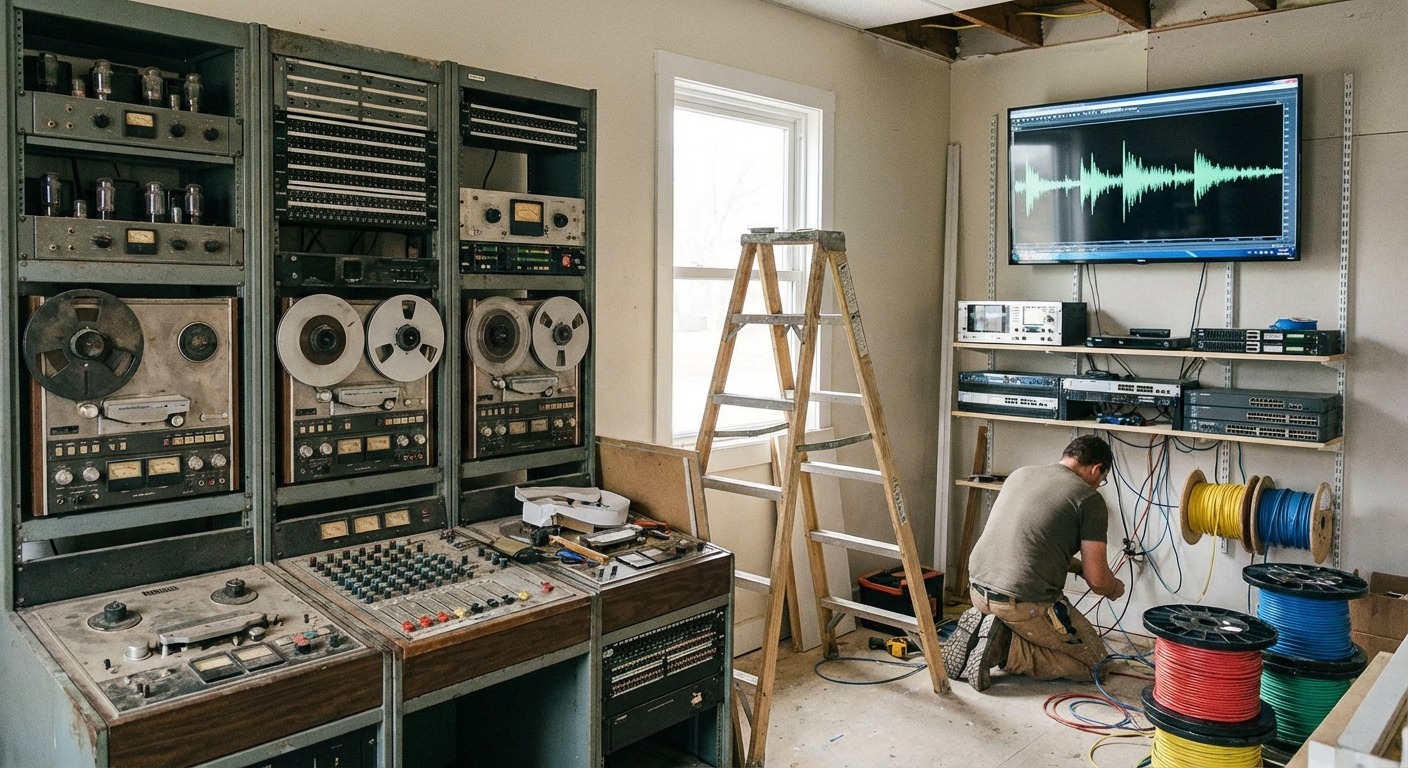
Every twenty years or so the underlying technology of radio communities changes enough that the people who built the previous generation have to decide whether to keep going or step away. Some communities make the transition and continue; others stall and quietly disappear. The differences between the two outcomes are not random and they are not primarily about budget. They are about whether the community had built a culture capable of treating the network as the durable thing and the technology as the disposable thing.
The packet radio community in Southern Ontario lived through one such transition and only partially completed it. The community broadcasting world is in the middle of another one right now, as IP audio transport, streaming distribution and software-defined transmitter equipment displace assumptions that were stable for forty years. Looking at how previous transitions actually went is the most useful preparation available.
What infrastructure change looks like up close
Infrastructure change rarely arrives as one obvious break. It arrives as a long series of small substitutions, each individually defensible, that gradually move the system to a different basis. A repeater controller gets replaced with one that has an Ethernet port. A studio router gets a stream encoder added on a side rack. A microwave STL gets paired with a cellular backup that, three years later, is carrying more of the traffic than the microwave is. None of those moments feels like “the transition.” The transition is the cumulative result.
This is also why communities sometimes wake up and discover they have been left behind. Each substitution looked small. The cumulative effect was that the community’s collective operating knowledge no longer matched the system it was operating. The amateur packet community ran into this hard in the early 2000s when consumer broadband and cellular text messaging quietly absorbed most of the use cases that packet had served. The infrastructure the operators understood — TNCs, radios, hilltop repeaters — still worked perfectly. The reason for using it had moved.
Communities that survived
The packet communities that survived the early-2000s shift did so by separating the question of “what we know” from the question of “what we use it for.” Networks that had built themselves around messaging gradually re-purposed toward APRS, emergency communications, experimental digital modes, and the quiet but persistent use of packet for off-grid and low-bandwidth scenarios. The skills did not become obsolete. They got applied to different problems. Our APRS / BBS / AXIP overview covers some of the protocols that carried this re-purposing.
The broadcast equivalent in the 2020s and 2030s will look similar. The community FM station that survives is the one that recognises its core asset is not the FM transmitter; it is the local audience, the local volunteer pool, the local programming culture and the regional relationships. The transmitter is one of several ways to reach that audience. An online stream is another. A regional mesh of partner stations is a third. A community whose identity is bound up in the specific technology rather than the people will struggle to make the next shift.
Communities that didn’t
- Single-leader collapse
- A community whose technical operations rest on one indispensable individual. When that person leaves, the system goes with them because no one else has the working knowledge to keep it running.
- Hardware capture
- A community that has invested so deeply in one specific technology that any alternative feels like a betrayal. New volunteers can’t join because the equipment is unfamiliar; existing volunteers can’t adapt because the equipment is sacred.
- Mission drift
- A community that forgets why it existed in the first place and ends up defending the technology rather than the purpose. Decisions get made on equipment grounds rather than community grounds.
- Document gap
- A community whose operating knowledge lives entirely in oral tradition and individual heads. When the generation turns over, the knowledge does not transfer.
None of these failure modes are exotic. Most failed amateur clubs and shuttered community stations fit one or more of them. The patterns repeat because the underlying causes are human rather than technical.
The pattern of successful transitions
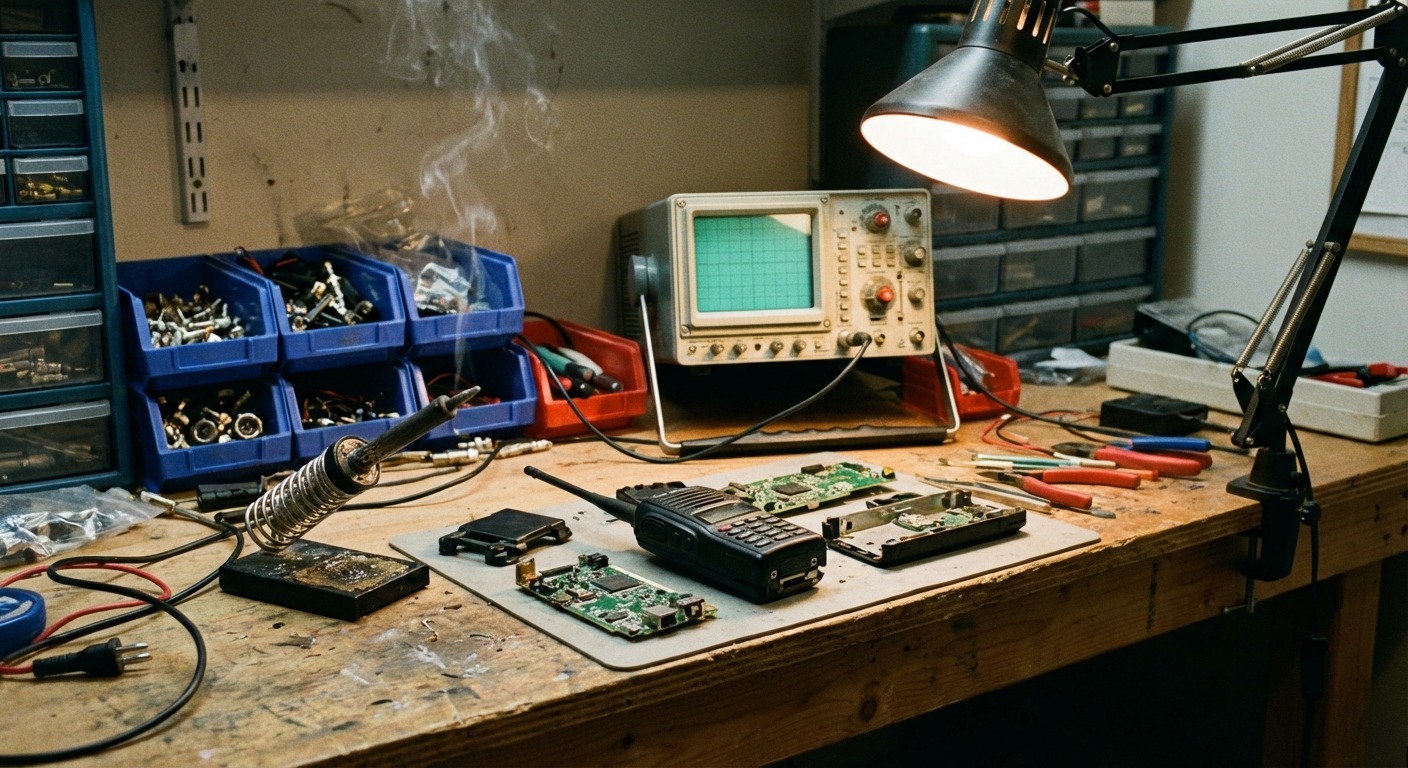
The transitions that have worked share a small number of features. The community started preparing before the change was forced on them. The community treated documentation as a primary deliverable rather than an afterthought. The community recruited new operators continuously rather than in panic when an existing one stepped away. The community kept relationships with adjacent communities — other clubs, other stations, regulatory bodies, equipment vendors — warm rather than transactional.
The packet community in Southern Ontario did some of this and not enough of the rest. The SOPRA archive that survives is genuinely useful for anyone trying to understand the working years; the operational continuity is thinner because the transition to whatever-comes-next was not actively planned. The community broadcasting world, if it is paying attention, has the chance to do better. We have written about the day-to-day version of this work in lessons from volunteer networks.
What “preparing” looks like in practice
Preparation is unglamorous. It is making sure that more than one person can rebuild the streaming origin from scratch. It is keeping a current network diagram on the wall of the studio. It is bringing a teenage volunteer to a transmitter site visit even though they will mostly stand around watching. It is running a quarterly drill where the duty engineer pretends to be unreachable and the secondary engineer has to bring the system back up alone. It is writing things down in the kind of plain language that a stranger can read in five years.
It is also being honest about the technologies that are quietly fading. AM broadcast in many North American markets is in long-term decline. Single-site low-power FM faces increasing competition from cheap online distribution. Amateur HF voice is shrinking even as digital modes grow. None of this is catastrophe, but a community pretending that the trend is not real will be poorly placed when the trend asserts itself. The Internet Archive’s collection of older radio publications is full of communities that read the trend wrong and paid for it.
Why the network is the thing worth preserving
The repeated lesson, across forty years of radio infrastructure transitions, is that the technology is replaceable and the network is not. By “network” here we mean the human network: the volunteers, the listeners, the regional collaborators, the institutional memory, the shared norms about how things are done. That network takes decades to build and weeks to lose. The technology underneath it can be swapped out in a quarter if the network is intact and motivated.
Treat the network as the durable asset. Treat the equipment as a cost of carrying the network forward. Make decisions on those terms and the long-running radio community keeps running through transitions that destroy peers who got the priorities reversed. Make decisions the other way and the equipment outlasts the community by years — a sad and common pattern in both amateur and broadcast worlds.
A practical close
If you operate or volunteer with a small radio organisation right now — amateur club, community FM, online station, regional emergency net — the most useful thing you can do this quarter is identify one piece of operational knowledge that lives only in one person’s head, and write it down where two more people can find it. Then identify one external relationship that has gone cold and warm it back up. Then identify one technology decision your group is avoiding and put it on the agenda. The transitions that work are made out of small habits like these, repeated for years.
One last note. Radio communities tend to underestimate how much of their continuity depends on rituals that look unimportant from outside. The annual field day. The monthly transmitter site visit. The Saturday morning coffee at someone’s kitchen table where the technical talk happens. These are not extras; they are the mechanism by which knowledge transfers, recruitment happens, and disagreements get resolved before they harden. When budgets tighten, these rituals are usually the first thing to be quietly dropped, and the community starts to lose cohesion in ways that take years to become visible. Protect the rituals as carefully as the equipment.
For the wider context behind this argument, see our pieces on distributed networks and on the SOPRA history — both of which describe what the long view of a radio community actually looks like in practice.