PacketRadio.ca
Community Broadcasting
How Regional Audio Builds Community Identity
Local radio shapes how a region hears itself. A look at how regional audio production builds shared identity across small Canadian communities.
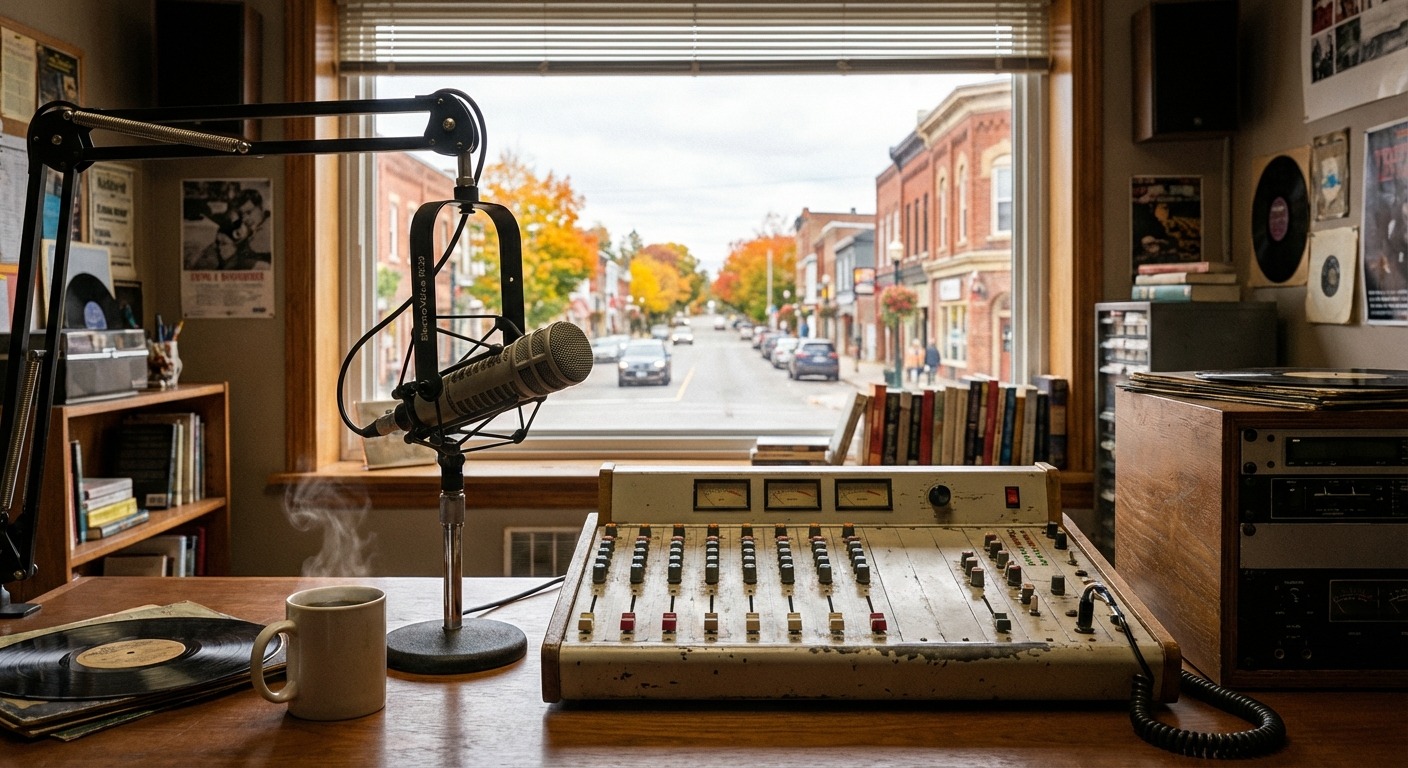
There is a difference between hearing a national news bulletin from Toronto and hearing your neighbour explain, on the same dial, why the township is rebuilding the bridge over the creek. Both are useful. They do not do the same work. The first informs you about a country you live in. The second tells you what kind of place you live in, and who else lives there with you.
Regional audio — the daily, weekly, sometimes amateurish sound of a place describing itself to itself — is one of the quieter civic infrastructures we have. It rarely makes news. It is mostly run by volunteers. And when it disappears, communities notice within a year, even if they can't always say why.
Identity is what gets repeated out loud
A region's identity isn't a slogan on a chamber-of-commerce sign. It's the accumulated weight of small statements made publicly, often, by recognisable voices. The morning host who pronounces the township road names properly. The farm report that names the actual farms. The school-closure list in February. The obituary read on the air the morning after. These are not exciting items in any individual broadcast. The cumulative effect, over years, is a town that knows itself.
This is the part of the work that's hardest to explain to a funder. It looks like routine programming. It functions as something closer to civic memory.
The Canadian community-radio context
Canada is unusually well-served, in principle, by its community broadcasting framework. The CRTC's community radio policy creates a real space on the FM dial for non-profit, locally-controlled stations, and the NCRA represents campus and community licensees nationally. The Community Media Advocacy Centre works the policy side on behalf of community media more broadly.
The system is imperfect. Funding is thin. Some communities have lost their FM stations and are now served — partially — by online efforts run from someone's spare bedroom. But the structural commitment is there: Canadian broadcasting policy genuinely treats community radio as a distinct sector, not as a subset of commercial broadcasting that didn't grow up.
That matters because it gives small Ontario, Maritime and Prairie communities a regulatory permission slip to run their own audio. We've written about the practical side of this on launching a small community station and Canadian community audio projects.
What regional audio actually contains
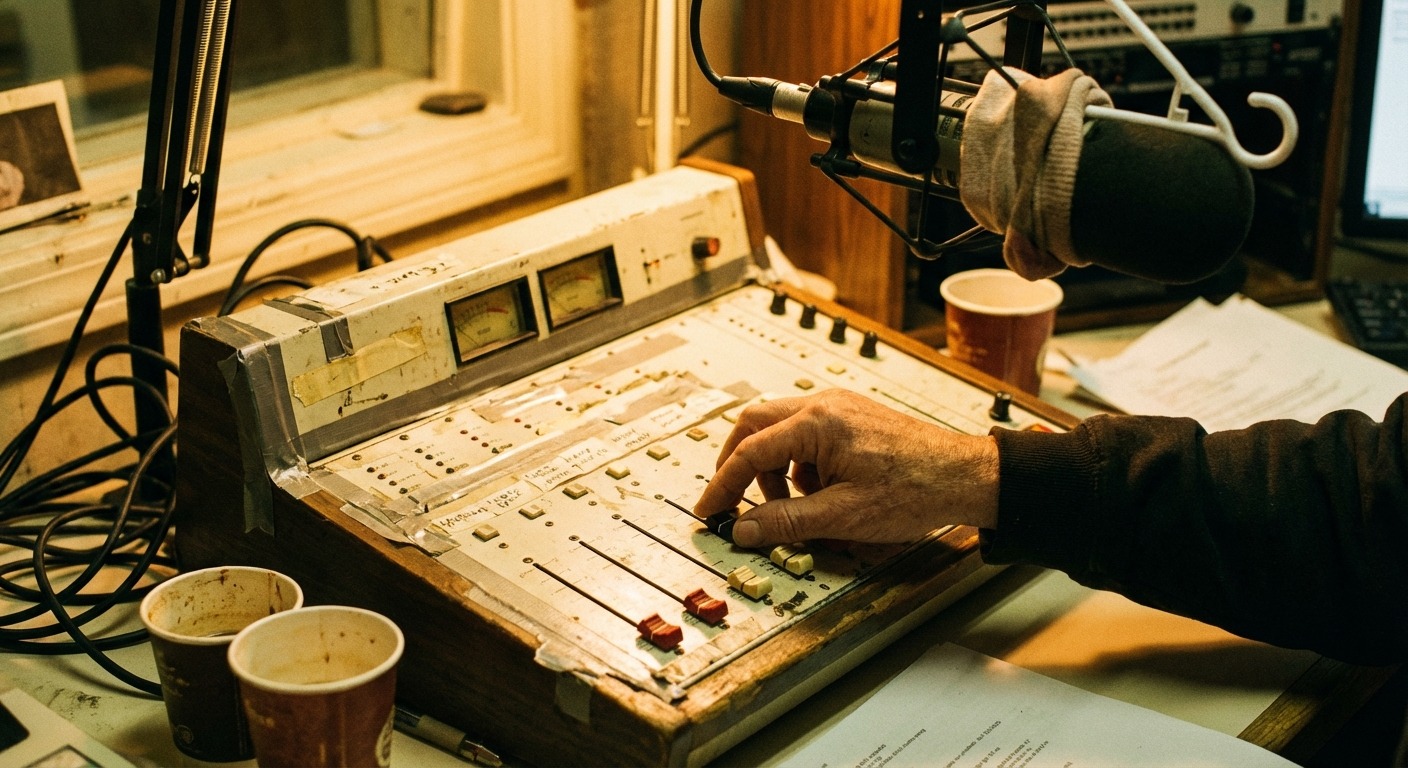
If you sit with a community station for a week and listen carefully, you start to notice the pattern. It is not, mostly, the pattern of commercial radio. It looks more like this:
- The civic announcements
- Council meeting agendas, road closures, water advisories, library hours, food bank schedules. Boring on paper. Indispensable in practice.
- The cultural calendar
- Church suppers, farmers' markets, fall fairs, hockey tournaments, 4-H events, the school musical. The sound of a place that has things going on.
- The interviews
- A new family doctor. A retiring teacher. A volunteer firefighter who just got their twenty-year service medal. The conservation authority biologist explaining the spring flood line.
- The languages and the music
- French-language programming in eastern and northern Ontario. Indigenous-language shows where the community supports them. Folk, country, gospel, and the local bands nobody else will play.
- The voices of programmers themselves
- Often the strongest identity element. A regular host whose taste in music is known, whose opinions are predictable enough to be argued with, becomes a kind of public character. Cities have columnists. Small communities have radio hosts.
None of those line items would survive a commercial format clock. They survive in community radio because the format clock isn't the boss. The community is.
What regional audio inherits from amateur radio
One of the through-lines we keep returning to on this site — and the reason a packet-radio archive ended up writing about community broadcasting — is the inheritance from amateur radio. Read our notes on what packet radio was alongside any honest description of how a small community FM station actually runs and the family resemblance is hard to miss.
Both depend on volunteer operators with enough technical curiosity to fix things. Both run on modest budgets. Both treat the airwaves as a shared resource with rules that need keeping. Both believe that a frequency assigned to a community is held in trust, not owned. The amateur radio operators who built the SOPRA-era networks across Southern Ontario in the 1980s and 1990s would recognise, immediately, the culture inside a campus station today. The gear is different. The disposition is the same.
This is not nostalgia. It's a practical claim. The community broadcasting sector that works best is the one that thinks of itself as infrastructure first and content second — see our broader argument on lessons from amateur infrastructure.
Why regional audio matters more, not less, in 2026
The standard argument against local radio over the last fifteen years has been: people get their information from the phone now, the local newspaper has folded, the regional TV news is consolidated out of a city two hours away, and isn't the on-demand world just better?
The honest answer is that on-demand is better for some things and worse for others. It is excellent for recovering specific information you went looking for. It is poor at the work of telling a community what's happening that it didn't know to ask about. A municipal council meeting is interesting to roughly nobody as a YouTube clip. The same meeting, summarised by a familiar voice during the morning show, gets absorbed by hundreds of people who had no plan to follow it.
This is the argument we develop in why local still matters: live, scheduled, locally-produced audio does serendipitous public information in a way that algorithmic feeds structurally cannot.
The role of the regular host
Commercial radio sells personalities. Community radio grows them, slowly, and usually without paying them. The difference matters. A volunteer host who has been doing the same Thursday-evening folk show for nine years is, by the tenth year, a small civic institution. Their tastes are known. Their taste in guests is known. Their introductions to records have started repeating slightly, which longtime listeners find reassuring rather than dull. They are why the show has an audience that finds it without prompting.
Stations that understand this protect their long-running hosts from format changes, schedule reshuffles, and well-meaning consultants. The host is not the show in any narrow sense. The host is the reason the show is part of the regional weather.
The fragility, and what protects against it
Regional audio is fragile in predictable ways. A core volunteer burns out. A funder withdraws. A tower lease gets renegotiated. A station manager retires and the institutional memory walks out the door with them.
The stations that survive these shocks tend to share a few habits. They document everything — schedules, logins, vendor contacts, transmitter maintenance, donor lists. They train more people than they need, so the loss of any one volunteer is recoverable. They diversify funding between membership, on-air fundraisers, modest sponsorship, and project grants from sources like the Department of Canadian Heritage's community media programs. And they keep the technical stack repairable — gear that can be fixed by a volunteer with a screwdriver and a spare card, not gear that needs a vendor flight.
None of this is glamorous. It is the same boring discipline that kept SOPRA-era packet nodes alive through the 1990s. The medium has changed. The work has not.
The role of language and place-name
One of the smaller things community stations do, and one of the most identity-defining, is pronounce local names correctly. The township, the concession road, the old family farm, the Indigenous place-name that predates the colonial one. A station that gets these right by reflex tells listeners that the people behind the microphone actually live where they say they live. A station that mispronounces them tells listeners the opposite.
This extends to language programming proper. A weekly Franco-Ontarian show, an Anishinaabemowin half-hour, a Punjabi morning slot in a community where Punjabi is widely spoken — these are not novelty items. They're the broadcast equivalent of a town acknowledging who actually lives in it. Where they exist, they tend to be the most fiercely-defended programming on the schedule.
A region that hears itself
The case for regional audio isn't sentimental. It's that a community in which neighbours can hear each other reliably — about the bridge, the bylaw, the funeral, the fall fair — behaves differently than one in which they can't. It shows up to things. It argues productively about local issues. It catches problems early because it has a shared channel for noticing them.
Building that channel, holding it open, training the next set of volunteers to keep it running — that is the actual job of community broadcasting. The format choices, FM or online or both, are downstream of it. For more on the people side of the work, see lessons from volunteer-driven networks and the broader about page.